
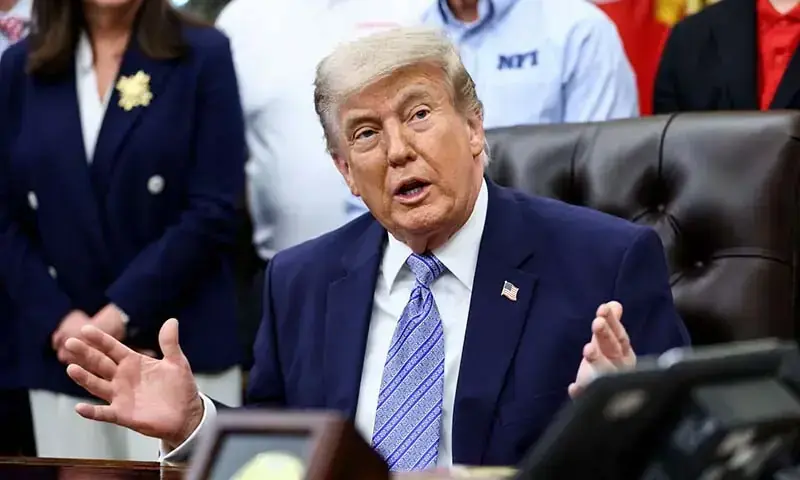
Trump Proposes Major Iran Deal to Reopen Strait of Hormuz Amid Ongoing War
Topic: defense & securityRegion: North AmericaUpdated: i2 outletsSources: 5Spectrum: Center Only⏱ 4 min read📡 Wire pickup⚠ 48h+ old
Story Summary
SITUATION
US President Donald Trump announced a potential peace deal with Iran that could be signed this weekend, aimed at reopening the Strait of Hormuz. The agreement, if finalized, would mark a significant diplomatic breakthrough in the ongoing war that has resulted in thousands of casualties (per dawn.com).
Coveragetap to expand ▾Spectrum: Center Only🌍ME: 2 · US: 1 · Asia: 1 · Other: 1
Political Spectrum
Position is inferred from coverage mix.
i2 outlets · Center
Left
Center
Right
Left: 0
Center: 5
Right: 0
Geography Coverage
Distribution of where coverage is coming from.
i2 unique outlets · Dominant: Middle East
KEY FACTS
- Vice President JD Vance could sign for the United States, Trump added.
- WASHINGTON / TEHRAN: US President Donald Trump on Thursday said the United States and Iran could sign a peace deal as soon as this weekend that would reopen shipping traffic through the Strait of Hormuz.
- Iran’s semi-official Fars news agency reported that Tehran is likely to approve the agreement, though it has yet to give a formal response.
- However, Iran’s foreign ministry spokesperson said matters related to an agreement are speculation and nothing has been finalised, according to Iran’s state-run IRNA news agency.
- “The strait will officially open as soon as we sign, which could be soon, very soon, maybe over the weekend in Europe,” he said.
HISTORICAL CONTEXT
The ongoing military conflict between the United States and Israel against Iran, which began with coordinated strikes in March 2026, has escalated tensions in the region significantly. The U.S. and Israel launched these strikes targeting Iranian military infrastructure, air defenses, and power plants, marking a new phase in a long-standing adversarial relationship.
In response to these military actions, Iran has conducted various military operations, framing them as defensive measures against what they perceive as unprovoked aggression from the U.S. and its ally, Israel.
Brief
In a significant diplomatic move, US President Donald Trump announced that a peace deal with Iran could be signed as soon as this weekend, potentially reopening the vital Strait of Hormuz for shipping traffic.
This agreement, if finalized, would represent a major breakthrough in the ongoing war that has already resulted in thousands of casualties and sharply increased global energy prices.
Trump emphasized the importance of the deal, stating, 'We just made a great settlement of the war with Iran.' While Iran's semi-official Fars news agency suggested that Tehran is likely to approve the agreement, the Iranian foreign ministry spokesperson cautioned that discussions remain speculative and no formal response has been issued yet.
The potential signing could involve Vice President JD Vance representing the United States, highlighting the administration's commitment to resolving the conflict. The backdrop of this announcement is a three-month-old war that has escalated tensions in the region, prompting urgent calls for a resolution.
As the situation develops, many governments is closely monitoring the responses from both Washington and Tehran, particularly regarding the implications for energy markets and regional stability.
Sources
5 of 5 linked articles
Vice President JD Vance could sign for the United States, Trump added.
dawn.comJun 12Center
↗
Trump: "Possible End-of-War Agreement with Iran as Early as This Weekend"...Markets Rally Across the Board (Comprehensive) - 아시아경제
asiae.co.krJun 12Left
↗
Trump Announces Finalization of Iran Peace Agreement, Signing Possible This Weekend in Europe - aju press
m.ajupress.comJun 11Left
↗
Iran shuts Hormuz strait: But wasn’t it already closed?
aljazeera.comJun 11Left
↗
US and Iranian attacks dent ceasefire, Iranian sources say talks intensify
reuters.comJun 11Left
↗