
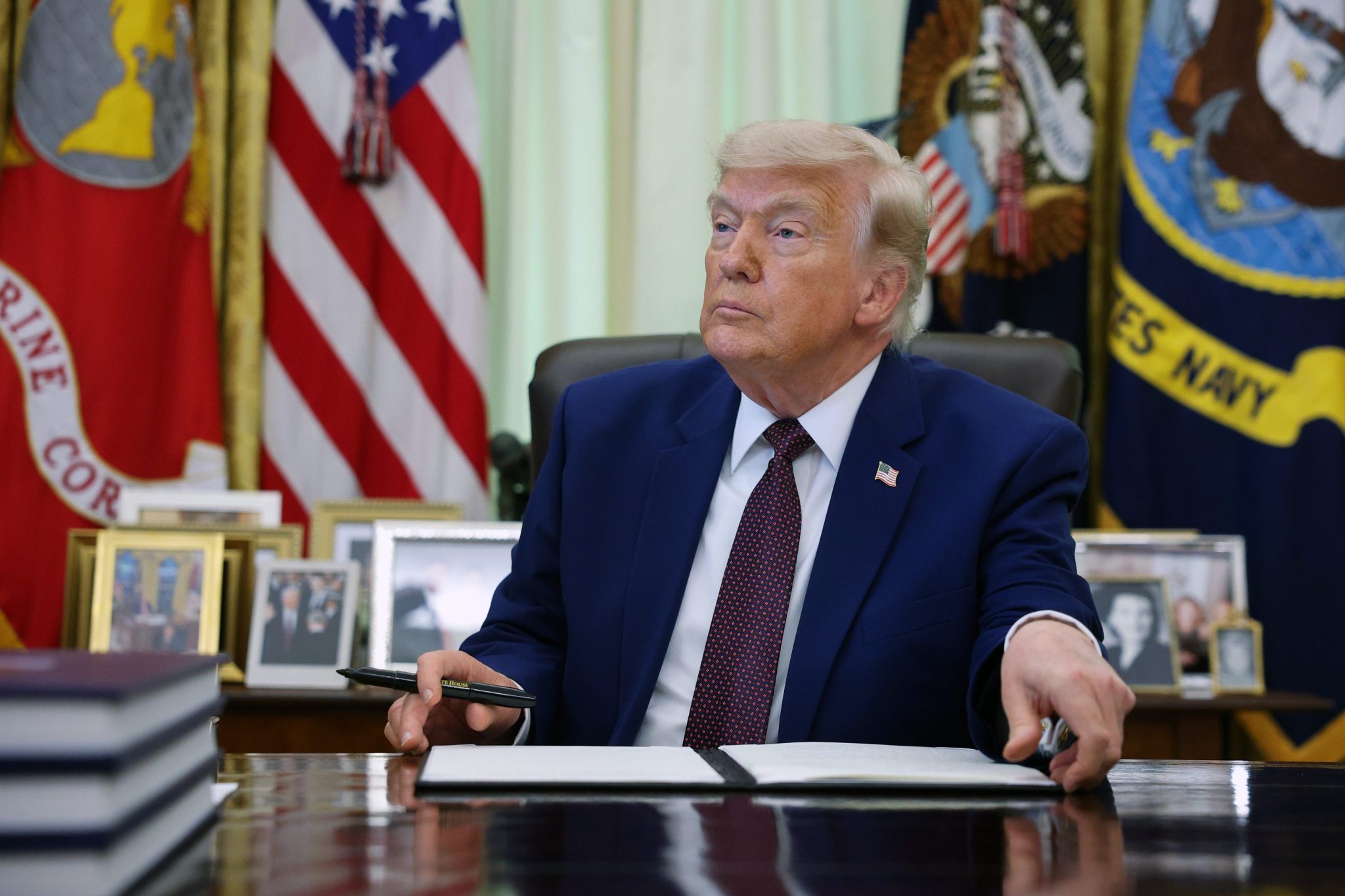
Trump Announces Iran Deal to Reopen Hormuz Strait Amid Tehran's Doubts
Topic: geopoliticsRegion: North AmericaUpdated: i6 outletsSources: 18⚠ Bias gap — sources divergeSpectrum: Mostly Center⏱ 4 min read
Story Summary
SITUATION
President Donald Trump announced that a deal between the U.S. and Iran to reopen the Strait of Hormuz will be signed on Sunday, June 14.
Coveragetap to expand ▾Spectrum: Mostly Center🌍Other: 8 · Europe: 3 · Asia: 3 · US: 2 · ME: 2
Political Spectrum
Position is inferred from coverage mix.
i6 outlets · Center
Left
Center
Right
Left: 2
Center: 14
Right: 2
Geography Coverage
Distribution of where coverage is coming from.
i6 unique outlets · Dominant: Global
KEY FACTS
- U.S. and Iran to close deal within a day, Trump says, but Tehran yet to confirm - The Washington Post
- Trump says Iran deal to be signed on Sunday
- The negotiations came after a military campaign launched by the US and Israel against Iran in late February.
- Tehran responded with strikes against Gulf states hosting American military bases and by closing the Strait of Hormuz, which normally handles around a quarter of global seaborne oil and LNG trade.
- “The Deal is scheduled to get signed tomorrow, and immediately after it is signed, the Hormuz Strait is OPEN TO ALL,” Trump wrote on Saturday.
- Trump said that “no money will exchange hands,” implying that the US would not unfreeze Iranian assets.
- Iran war: Trump says deal with Iran to be signed on Sunday - DW
- Trump declares US-Iran deal to be signed Sunday; no confirmation from Tehran - The Times of Israel
HISTORICAL CONTEXT
The ongoing military conflict between the United States and Israel against Iran, which began in March 2026, serves as the immediate backdrop for the current geopolitical developments.
This conflict was initiated following a series of escalating tensions and military exchanges, with the US and Israel launching coordinated strikes targeting Iranian military infrastructure, air defenses, and power plants.
Brief
President Donald Trump announced on June 13, 2026, that a peace deal with Iran is set to be signed on Sunday, June 14, which would reopen the strategically vital Strait of Hormuz. Trump stated that the deal would allow for immediate access to the strait, a critical shipping corridor for global oil trade.
However, Iranian officials have cast doubt on the agreement, with Foreign Ministry spokesperson Esmaeil Baghaei asserting that Tehran has no plans to send negotiators for a signing on that date.
This skepticism comes despite optimistic statements from Pakistan's Prime Minister Shehbaz Sharif, who indicated that the deal is closer than ever and could be finalized within 24 hours. Trump has also made it clear that no financial concessions will be made to Iran as part of this agreement, a point that has been a significant sticking point in negotiations.
The backdrop to these discussions includes a military campaign initiated by the US and Israel against Iran, which began in February 2026, leading to heightened tensions in the region. While Trump has repeatedly claimed that a deal is imminent, previous announcements have not resulted in tangible agreements, leaving the outcome of this latest declaration uncertain.
Where sources differ
Bias gap1.05 / 2.0
Left- and right-leaning outlets are covering this story differently — in which facts to emphasize, which context to include, and how to frame causes and consequences.
Left-leaning (2)
washingtonpost.com-0.35
and Iran to close deal within a day, Trump says, but Tehran yet to confirm - The Washington Post and Iran to close deal within a day, Trump says, but Tehran yet to confirm - The Wa…
aljazeera_en-0.20
US President Trump says US-Iran deal to be signed tomorrow US President Donald Trump says a deal between Washington and Tehran will be signed on Sunday and that the Strait of Hormu…
Center (14)
thenigerianvoice.comdw.comtimesofisrael.commsn.comsmh.com.aufortune_businesskpic.comtheguardian.comynetnews.combenzinga.comndtvprofit.comkurdistan24.netabc_australiafirstpost.com
Right-leaning (2)
ny_post_news+0.80
Trump says Iran peace deal will be signed Sunday, reveals Tehran ‘no longer’ wants a nuke Trump says Iran peace deal will be signed Sunday, reveals Tehran ‘no longer’ wants a nuke …
rt.com+0.70
Trump says Iran deal to be signed on Sunday Trump says Iran deal to be signed on Sunday Trump says Iran deal to be signed on Sunday Trump says Iran deal to be signed on Sunday Trum…
Sources
18 of 18 linked articles
U.S. and Iran to close deal within a day, Trump says, but Tehran yet to confirm
washingtonpost.comJun 13Left
↗
Trump says Iran deal to be signed on Sunday
rt.comJun 13Right
↗
Middle-East Crisis: US, Iran Set To Sign Peace Deal On Sunday, Reopen Strait Of Hormuz - thenigerianvoice.com
thenigerianvoice.comJun 13Left
↗
Iran war: Trump says deal with Iran to be signed on Sunday - DW
dw.comJun 13Center
↗
Trump declares US-Iran deal to be signed Sunday; no confirmation from Tehran
timesofisrael.comJun 13Center
↗
Trump says Iran peace deal to be signed Sunday, Tehran cautious
msn.comJun 13Left
↗