
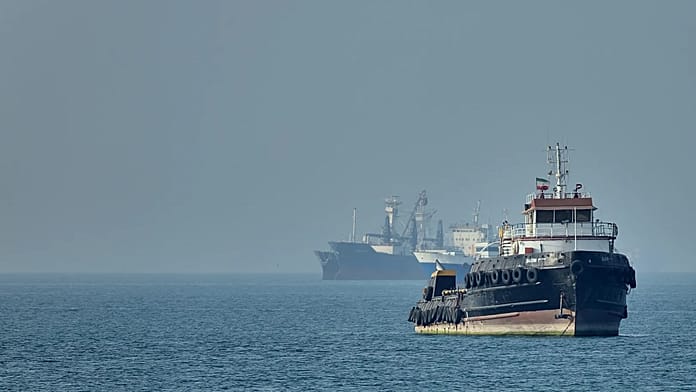
Iran Fires on South Korean Vessel in Strait of Hormuz, Trump Minimizes Impact
Coveragetap to expand ▾Spectrum: Center Only🌍Other: 2 · US: 1 · Europe: 1 · ME: 1
- Iran fired on a South Korean-operated vessel in the Strait of Hormuz, causing a fire (per news.google.com).
- President Trump stated that Iran 'took some shots' but caused little damage (per euronews.com).
- The Strait of Hormuz is a critical chokepoint for global oil shipments (per news.google.com).
- The attack on the vessel is part of heightened tensions in the region following US-Israel strikes on Iran (per euronews.com).
- The South Korean government has not yet issued an official statement regarding the incident (per news.google.com).
Iran has fired on a South Korean-operated vessel in the strategically vital Strait of Hormuz, setting the ship ablaze. This incident comes amid heightened tensions in the region following coordinated US-Israel military strikes against Iran.
President Donald Trump, addressing the situation, minimized the impact by stating that Iran 'took some shots' but caused little damage to the vessel. The Strait of Hormuz, through which a significant portion of the world's oil supply is transported, remains a focal point of geopolitical tensions.
The attack did not result in any reported casualties, and the extent of the damage to the vessel remains under assessment. The South Korean government has yet to release an official statement, while the United States has not indicated any immediate military response.
This event underscores the volatile nature of the region, where military actions and retaliations have become increasingly frequent. The broader context involves ongoing US-Israel military operations against Iran, which have intensified since early March 2026. These operations are part of a larger strategy to counter Iran's influence and military capabilities in the region.
Iran's actions in the Strait of Hormuz can be seen as a response to these pressures, highlighting the complex interplay of military and political maneuvers in the area.
While President Trump has sought to downplay the incident, the strategic implications of any disruption in the Strait of Hormuz are significant, given its role in global energy markets. many governments, particularly countries reliant on oil shipments through this passage, will be closely monitoring the situation.
The lack of immediate escalation from the US suggests a cautious approach, possibly aimed at avoiding further destabilization. However, the potential for future confrontations remains, as both sides continue to assert their positions in the region.
As the situation develops, the focus will likely remain on diplomatic efforts to de-escalate tensions and ensure the safe passage of vessels through the Strait of Hormuz. The incident serves as a reminder of the fragile balance of power in the Middle East and the potential for localized conflicts to have far-reaching global consequences.
- The South Korean-operated vessel's crew and cargo face immediate risks from the attack, impacting maritime safety and insurance costs.
- Global oil markets are vulnerable to disruptions in the Strait of Hormuz, affecting energy prices and economic stability worldwide.
- Iran's actions highlight the ongoing regional power struggle, with potential implications for international diplomatic and military strategies.
- The US government's response, or lack thereof, could influence future engagements and alliances in the Middle East.
- Whether the South Korean government issues an official statement or takes diplomatic action in response to the attack.
- Any changes in US military posture in the region following the incident.
- Potential disruptions to oil shipments through the Strait of Hormuz and their impact on global energy markets.
- Iran's next moves in the context of ongoing US-Israel military operations.
- news.google.com emphasizes the fire on the vessel; euronews.com focuses on Trump's minimization of the damage.
- The extent of the damage to the vessel remains unclear, with no detailed reports available.
- No source mentions the specific US-Israel military actions that preceded Iran's response.
- Both sources agree Iran fired on the vessel, but differ on the perceived impact.
- Both sources attribute the attack to Iran, but differ on the severity of the damage.
- Trump's quote: 'taken some shots' but caused little damage (per euronews.com).