
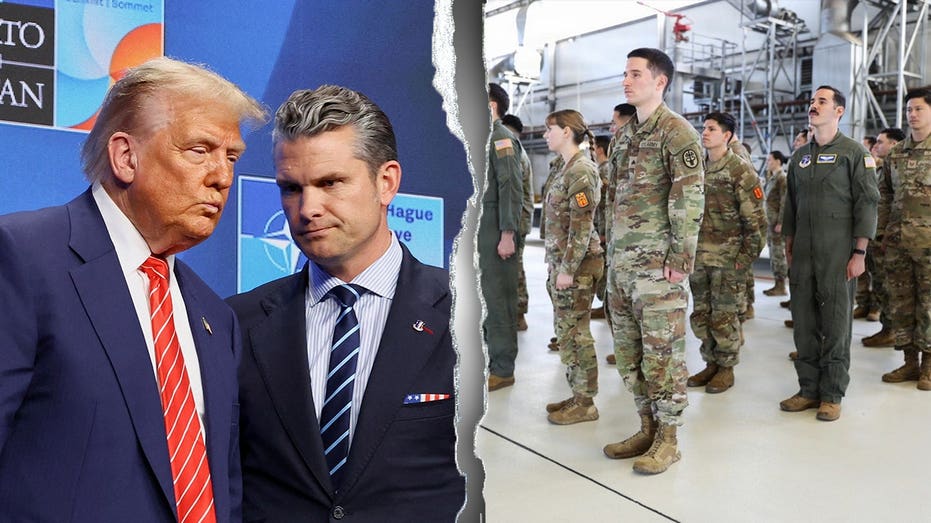
Trump's Plan to Withdraw Troops from Germany Faces Congressional Hurdle
Coveragetap to expand ▾Spectrum: Mostly Center🌍US: 4 · Europe: 1
- The Pentagon has ordered the withdrawal of 5,000 U.S. troops from Germany (per foxnews.com).
- President Trump is seeking to reduce the U.S. military presence in Europe (per foxnews.com).
- Congress has the potential to block Trump's troop withdrawal plan (per foxnews.com).
- Trump is considering methods to bypass Congress to implement the troop cuts (per foxnews.com).
- The troop withdrawal is part of Trump's ongoing dispute with German Chancellor Merz (per foxnews.com).
The Pentagon has initiated the withdrawal of 5,000 U.S. troops from Germany, marking a significant step in President Donald Trump's broader strategy to reduce American military presence in Europe. This decision is part of Trump's ongoing efforts to recalibrate U.S. foreign military commitments, which he argues are outdated and financially burdensome.
However, the move has encountered resistance from Congress, which holds the power to block such troop reductions. In response, Trump is reportedly exploring alternative methods to circumvent congressional approval, a tactic that could further strain executive-legislative relations.
The troop withdrawal is not merely a strategic realignment but also a reflection of Trump's contentious relationship with German Chancellor Merz. The two leaders have clashed over various issues, including defense spending and trade policies, with Trump frequently criticizing Germany for not meeting NATO's defense spending targets.
By reducing the U.S. military footprint in Germany, Trump aims to pressure Berlin into increasing its defense budget, aligning with his broader 'America First' policy. Congressional opposition to the troop cuts stems from concerns about weakening NATO and diminishing U.S. influence in Europe.
Lawmakers from both parties have expressed apprehension that reducing troop numbers could embolden adversaries like Russia, which has been increasing its military activities in the region. Despite these concerns, Trump remains steadfast in his commitment to recalibrate U.S. military engagements abroad. The legal and political implications of bypassing Congress are significant.
The U.S. Constitution grants Congress the power to regulate military forces, and any attempt by the executive branch to unilaterally alter troop deployments could lead to legal challenges. Additionally, such a move could set a precedent for future administrations, potentially altering the balance of power between the executive and legislative branches.
As the situation unfolds, many governments is closely monitoring the potential impacts on NATO's cohesion and the broader geopolitical landscape. Allies and adversaries alike are assessing how changes in U.S. military posture might affect regional security dynamics.
The outcome of this dispute could have lasting implications for U.S. foreign policy and its role on the global stage.
- The withdrawal of 5,000 U.S. troops from Germany could weaken NATO's defensive posture, potentially emboldening Russia to increase its military activities in Europe.
- Congressional opposition highlights the potential for a constitutional conflict over the balance of power between the executive and legislative branches regarding military deployments.
- Germany, as a key NATO ally, may face increased pressure to boost its defense spending, impacting its domestic budget priorities and international relations.
- Whether President Trump will attempt to bypass Congress to implement the troop withdrawal.
- Congressional votes or resolutions aimed at blocking the troop cuts.
- Reactions from NATO allies, particularly Germany, regarding changes in U.S. military presence.
Left- and right-leaning outlets are covering this story differently — in which facts to emphasize, which context to include, and how to frame causes and consequences.
5 specific areas where coverage diverges — see below.
- Fox News emphasizes Trump's strategy to bypass Congress, while other outlets may focus on the potential impacts on NATO.
- The specific methods Trump might use to bypass Congress remain unverified.
- No source mentions the potential economic impacts on local communities in Germany due to troop withdrawal.
- Fox News attributes the troop withdrawal to Trump's feud with Merz, while other sources might highlight strategic realignment.
- Fox News attributes the withdrawal decision directly to Trump and the Pentagon.