
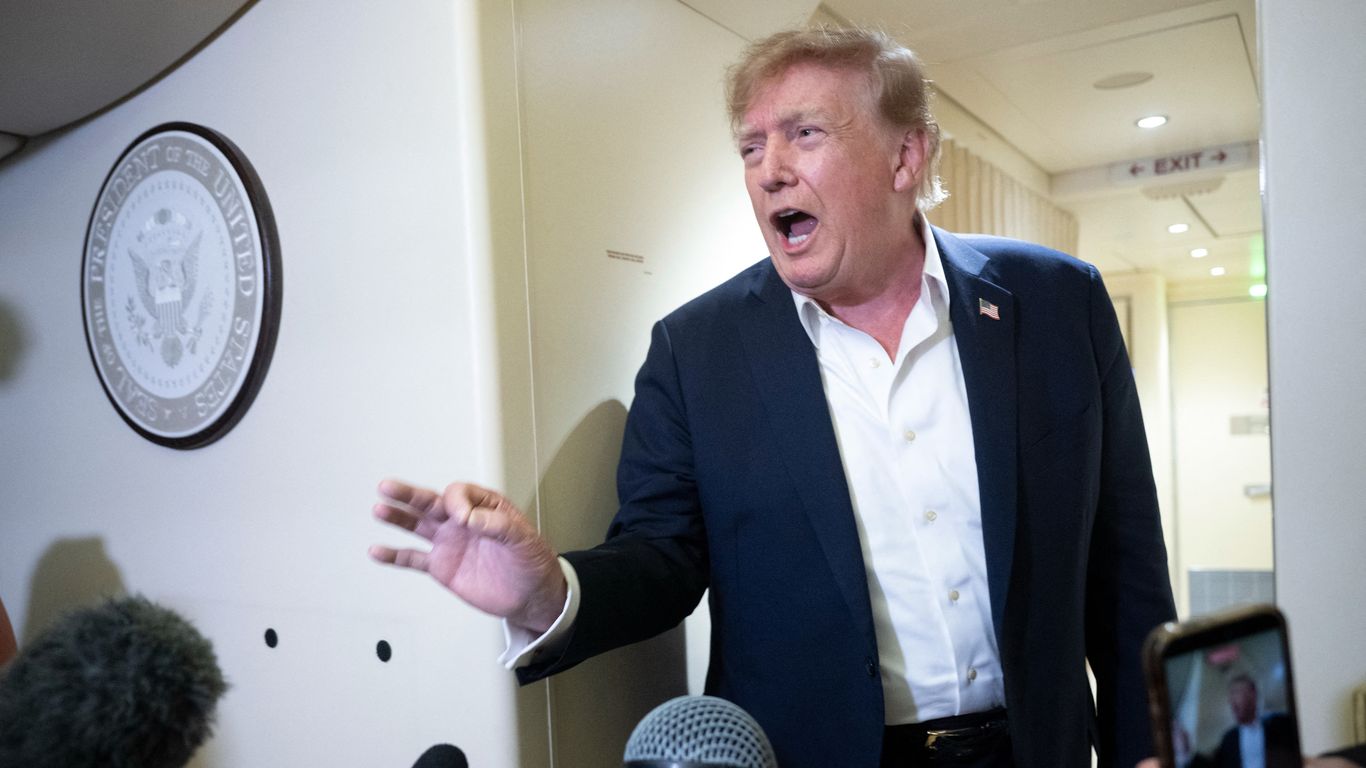
Trump Publicly Rebukes Justices He Appointed After Court Blocks His Mail‑Ballot Rule
Coveragetap to expand ▾Spectrum: Mostly Center🌍US: 2
- Donald Trump criticized the Supreme Court justices he helped appoint, saying 'These Are Not the People I Interviewed' (per news.google.com)
- Coverage shows both the judicial ruling and Trump's public denunciation occurred in the same reporting window and are linked in media narratives (per news.google.com)
The most significant fact in the reporting is that the Supreme Court blocked Donald Trump's plan to restrict mail-in ballots, and Trump immediately turned his fire on the justices he nominated.
One outlet emphasizes the court's decision as the central development; another emphasizes Trump's personal rebuke — quoting him saying, 'These Are Not the People I Interviewed' — and frames the episode as a rupture between the president and the bench he helped build (per news.google.com).
The court's voting outcome is presented as a concrete check on the administration's voting rules, while Trump's statements signal growing public strain between the White House and several justices; both facts appear in the same reporting cycle but the two outlets prioritize different levers of news value (per news.google.com).
Trump and his allies have argued for tighter mail-ballot rules as a matter of election integrity; the court's action halted that particular measure and prompted Trump's unusually pointed critique of his nominees, which commentators on one side read as political pressure on the judiciary and on the other side read as a leader frustrated with a legal setback (per news.google.com).
Reporting so far documents the blocked policy and Trump's quote; it does not provide primary-source details tying specific justices' votes to particular lines in policy opinions or offer new legal filings beyond the decision itself (per news.google.com).
The immediate stakes are institutional: a sitting president publicly questioning the fidelity of justices he appointed after the court rejected an administration voting restriction, a dynamic that both outlets identify though they frame its significance differently (per news.google.com).
- Concrete costs fall on voters in jurisdictions where the blocked restriction would have changed mail-in ballot access — the mechanism is a court decision preserving existing ballot rules (per news.google.com).
- The judiciary bears reputational costs as a sitting president publicly questions justices he appointed, which could pressure future litigation and confirmatory politics (per news.google.com).
- Donald Trump and his political allies may benefit politically from signaling toughness on election rules to their base even after the court blocked the policy (per news.google.com).
- Whether Donald Trump issues further public criticisms of named justices or specific opinions within 30 days (per news.google.com).
- Whether the administration files a new legal challenge or revised rule on mail-in ballots in federal court within the next election cycle (per news.google.com).
- Whether congressional actors pursue oversight or confirmation-related responses to the president's public rebuke at scheduled hearings this session (per news.google.com).
Left- and right-leaning outlets are covering this story differently — in which facts to emphasize, which context to include, and how to frame causes and consequences.
7 specific areas where coverage diverges — see below.
- One outlet foregrounds Trump's personal attack on the justices and quotes 'These Are Not the People I Interviewed' (per news.google.com).
- The other outlet foregrounds the Supreme Court decision that blocked Trump's mail-in ballot rule, treating the legal outcome as primary news (per news.google.com).
- No source in this pack specifies which individual justices cast which votes or were directly criticized by name; that detail is unclear (per news.google.com).
- No source here provides the text of the court's opinion or which legal grounds it used to block the mail-in ballot restriction.
- No source supplies data on how many voters would have been affected by the restricted mail-in ballot rule.
- No source mentions any congressional or procedural next steps tied to judicial oversight or confirmations that would respond to the president's critique.
- Neither source gives vote counts or specific numerical estimates of affected ballots; both omit these figures (per news.google.com).
- Both sources link the court decision and Trump's public attack temporally, but they diverge on whether Trump's comments are primarily a response to the legal loss or part of broader political messaging (per news.google.com).
- Both outlets attribute the quote 'These Are Not the People I Interviewed' to Donald Trump; the court action is attributed to the Supreme Court (per news.google.com).