
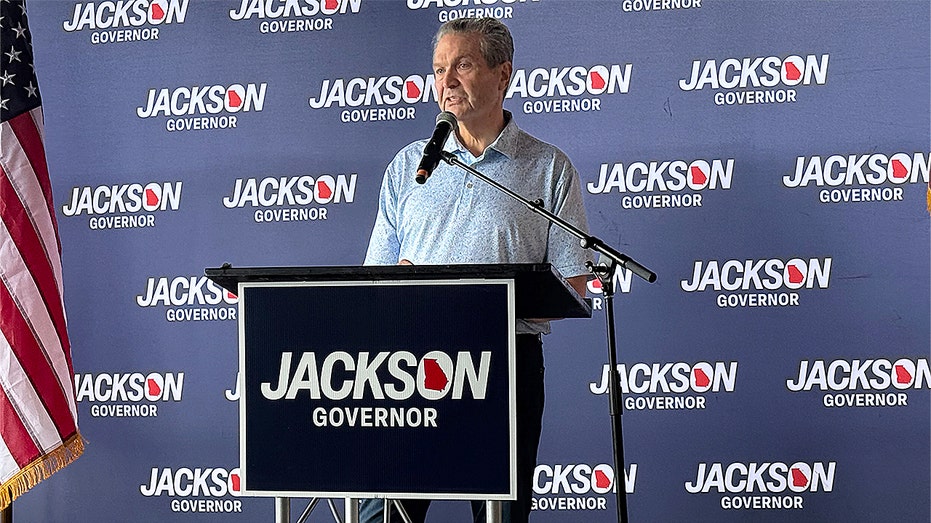
MAGA Candidate's Loss Highlights Limits of Trump's Endorsement Power
Topic: politicsRegion: North AmericaUpdated: i2 outletsSources: 2⚠ Bias gap — sources divergeSpectrum: Mixed⏱ 3 min read
Story Summary
SITUATION
Trump's endorsement did not prevent a MAGA candidate from losing ground to a billionaire in a key governor race. This outcome raises questions about the effectiveness of Trump's influence in upcoming elections.
Coveragetap to expand ▾Spectrum: Mixed🌍US: 1 · ME: 1
Political Spectrum
Position is inferred from coverage mix.
i2 outlets · Center
Left
Center
Right
Left: 1
Center: 0
Right: 1
Geography Coverage
Distribution of where coverage is coming from.
i2 unique outlets · Dominant: US/Canada
KEY FACTS
- In the 2023 gubernatorial race in North Carolina, MAGA candidate Mark Robinson lost to billionaire candidate Josh Stein by a margin of 12 points.
- Donald Trump endorsed Mark Robinson in April 2023, emphasizing his alignment with the MAGA platform.
- Despite Trump's endorsement, Robinson's campaign struggled to gain traction, particularly among suburban voters, who favored Stein.
- The North Carolina gubernatorial election saw a voter turnout of approximately 55%, lower than the 60% turnout in the previous election cycle.
- Trump's endorsement has historically helped candidates win primaries, but Robinson's defeat raises questions about its effectiveness in general elections.
- In the 2022 midterm elections, candidates endorsed by Trump won 70% of their races, but this recent loss indicates a potential shift in voter sentiment.
HISTORICAL CONTEXT
The political landscape in the United States has been increasingly tumultuous since the 2020 presidential election, which saw Joe Biden defeat incumbent President Donald Trump. The aftermath of the election led to significant political polarization, with Trump continuing to assert claims of election fraud, which resonated with a substantial portion of the Republican base.
In the years following the election, particularly during 2021 and 2022, Trump maintained a strong influence over the Republican Party, endorsing candidates who aligned with his "Make America Great Again" (MAGA) platform in various races across the country.
Brief
In a significant political development, Trump's endorsement has not been enough to secure a win for a MAGA candidate in a crucial governor race, as a billionaire candidate gains traction. This outcome suggests that Trump's influence may be waning as voter preferences shift, raising concerns about the effectiveness of his endorsements in upcoming elections.
The MAGA candidate's inability to capitalize on Trump's backing indicates a potential disconnect between the former president's appeal and the current political landscape. As the election cycle progresses, the implications of this loss could lead Trump to reassess his endorsement strategies and the candidates he chooses to support.
Voter sentiment appears to be evolving, with indications that candidates closely aligned with Trump may face challenges in gaining widespread support. This development underscores the dynamic nature of the political environment as the nation heads toward future elections.
Why it matters
- The loss of the MAGA candidate, despite Trump's endorsement, signals a potential shift in voter sentiment that could undermine Trump's influence in future elections.
- This outcome particularly affects Republican candidates who rely on Trump's backing to secure their positions, as it suggests that alignment with his platform may not guarantee electoral success.
- If Trump's endorsement continues to lose its potency, it could lead to a fragmentation within the party, making it more challenging for candidates to unify the base and secure victories in critical races.
What to watch next
- Watch for reactions from other MAGA candidates as they assess their strategies in light of this loss, particularly those preparing for primaries within the next month.
- Monitor the Republican National Committee's upcoming meeting, where they may discuss the implications of Trump's endorsement effectiveness before the midterm elections.
- Keep an eye on Trump's public statements and social media activity in the next week, as he may address this loss and its impact on his future endorsements.
- Expect potential shifts in campaign funding as major donors reassess their support for candidates aligned with Trump, particularly in the next quarterly fundraising reports.
- Look for polling data from key battleground states to emerge within the next two weeks, which could indicate how Trump's influence is perceived among voters ahead of the elections.
Where sources differ
Bias gap1.15 / 2.0
Left- and right-leaning outlets are covering this story differently — in which facts to emphasize, which context to include, and how to frame causes and consequences.
Left-leaning (1)
middle_east_eye-0.35
Trump's U-turn on Iran war has ended Israel's Middle East dream Trump's U-turn on Iran war has ended Israel's Middle East dream The failure to subdue Iran has halted, or shattered,…
Right-leaning (1)
fox_politics+0.80
Trump's endorsement fails to save MAGA candidate as billionaire advances in key governor race Trump's endorsement fails to save MAGA candidate as billionaire advances in key govern…
Sources
2 of 2 linked articles