
UAE says it intercepted Iranian missiles for first time since ceasefire began
Topic: defense & securityRegion: Middle EastUpdated: i6 outletsSources: 24⚠ Bias gap — sources divergeSpectrum: MixedFiltered: US/Canada (9/23)· Clear⏱ 4 min read⚠ 3d+ old
Story Summary
SITUATION
Trump says Iran deal to end war and reopen Strait of Hormuz 'largely negotiated'. Reporting is limited at this stage.
Coveragetap to expand ▾Spectrum: Mixed🌍US: 9 · Other: 9 · Europe: 3 · ME: 2
Political Spectrum
Position is inferred from coverage mix.
i6 outlets · Center
Left
Center
Right
Left: 5
Center: 13
Right: 5
Geography Coverage
Distribution of where coverage is coming from.
i6 unique outlets · Dominant: US/Canada
KEY FACTS
- CENTCOM says 100 ships redirected in naval blockade on Iranian ports
HISTORICAL CONTEXT
In the months leading up to the recent escalation in the Strait of Hormuz, the geopolitical landscape in the Middle East had become increasingly fraught. In March 2026, coordinated military strikes by the United States and Israel against Iranian military installations marked a significant turning point in U.S.-Iran relations.
These strikes were purportedly aimed at curbing Iran's growing influence in the region, particularly its support for proxy groups in Syria, Iraq, and Yemen. The Iranian response to these strikes was swift, with Tehran vowing to retaliate against any further aggression, thereby heightening tensions in an already volatile area.
Brief
On May 4, 2026, the United Arab Emirates intercepted Iranian missiles for the first time since a fragile ceasefire took effect in early April. This incident follows the UAE's report of being attacked by Iran, which has raised concerns about the stability of the region amidst ongoing military tensions.
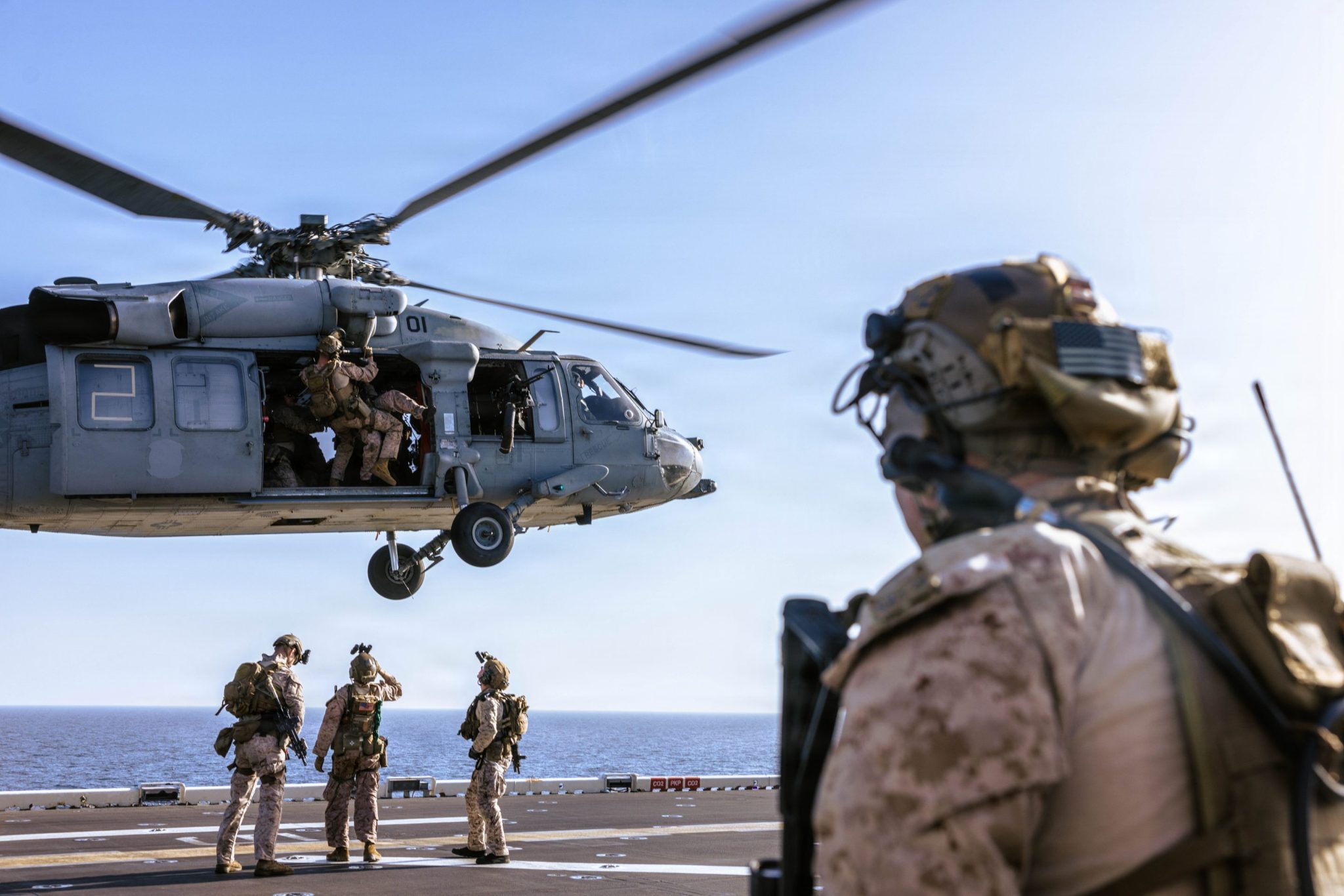
The U.S. military has been actively redirecting vessels under a blockade aimed at Iranian ports, with 100 ships reportedly affected. President Donald Trump has indicated that a peace deal with Iran is nearing completion, which includes discussions on reopening the critical Strait of Hormuz.
However, the missile attack from Iran suggests that military actions continue to overshadow diplomatic efforts. The U.S. military has confirmed that it engaged Iranian forces in response to threats against civilian shipping, further complicating the situation.
As negotiations progress, the focus remains on sanctions and ceasefire guarantees, but the recent escalation underscores the volatility in the region and the challenges facing diplomatic resolutions.
Where sources differ
Bias gap1.30 / 2.0
Left- and right-leaning outlets are covering this story differently — in which facts to emphasize, which context to include, and how to frame causes and consequences.
Left-leaning (5)
the_hill-0.90
100 ships redirected amid naval blockade of Iran ports, Strait of Hormuz: Centcom. Reporting is limited at this stage.
cnbc.com-0.80
UAE says it intercepted Iranian missiles for first time since ceasefire began UAE says it intercepted Iranian missiles for first time since ceasefire began - CNBC. Reporting is lim…
theguardian.com-0.50
Trump says peace deal with Iran largely reached with strait of Hormuz to open - The Guardian
aljazeera_en-0.20
Trump calls Iran response “totally unacceptable” Trump calls Iran response “totally unacceptable” Trump calls Iran response “totally unacceptable” Trump calls Iran response “totall…
npr.org-0.15
fights to reopen the Strait of Hormuz as UAE says it's attacked by Iran The U.S. fights to reopen the Strait of Hormuz as UAE says it's attacked by Iran - NPR.
Center (13)
benzinga.comfortune_businessyahoo.comstripes.comthenewregion.comsaudigazette.com.sacentcom.milgulfnews.commsn.comcnbc.commsn.combbc.comdw.com
Right-leaning (5)
newsmax.com+0.90
foxnews.com+0.80
Trump says Iran deal to end war and reopen Strait of Hormuz 'largely negotiated'. Reporting is limited at this stage.
ny_post_news+0.80
Why reopening Strait of Hormuz is ‘too high’ a risk for merchants — even with military escort Why reopening Strait of Hormuz is ‘too high’ a risk for merchants — even with military…
foxnews.com+0.80
strategy: maritime pressure is powerful, but it doesn’t fully extend across Eurasia. Key China-Iran infrastructure exposes critical hole in Trump's war strategy Key China-Iran infr…
fox_politics+0.80
Key China-Iran infrastructure exposes critical hole in Trump's war strategy Key China-Iran infrastructure exposes critical hole in Trump's war strategy Key China-Iran infrastructur…
Sources
9 of 23 linked articles · Filter: US/Canada
Trump says Iran deal to end war and reopen Strait of Hormuz 'largely negotiated'
foxnews.comMay 24Right
↗
CENTCOM: US Blockade Has Redirected 100 Ships off the Iranian Coast
newsmax.comMay 23Left
↗
100 ships redirected amid naval blockade of Iran ports, Strait of Hormuz: Centcom
thehill.comMay 23Left
↗
U.S., Iran signal peace progress — but remain at odds over enriched uranium, Strait of Hormuz tolls
cnbc.comMay 22Left
↗
Why reopening Strait of Hormuz is ‘too high’ a risk for merchants — even with military escort
nypost.comMay 20Center
↗
strategy: maritime pressure is powerful, but it doesn’t fully extend across Eurasia.
foxnews.comMay 15Right
↗