
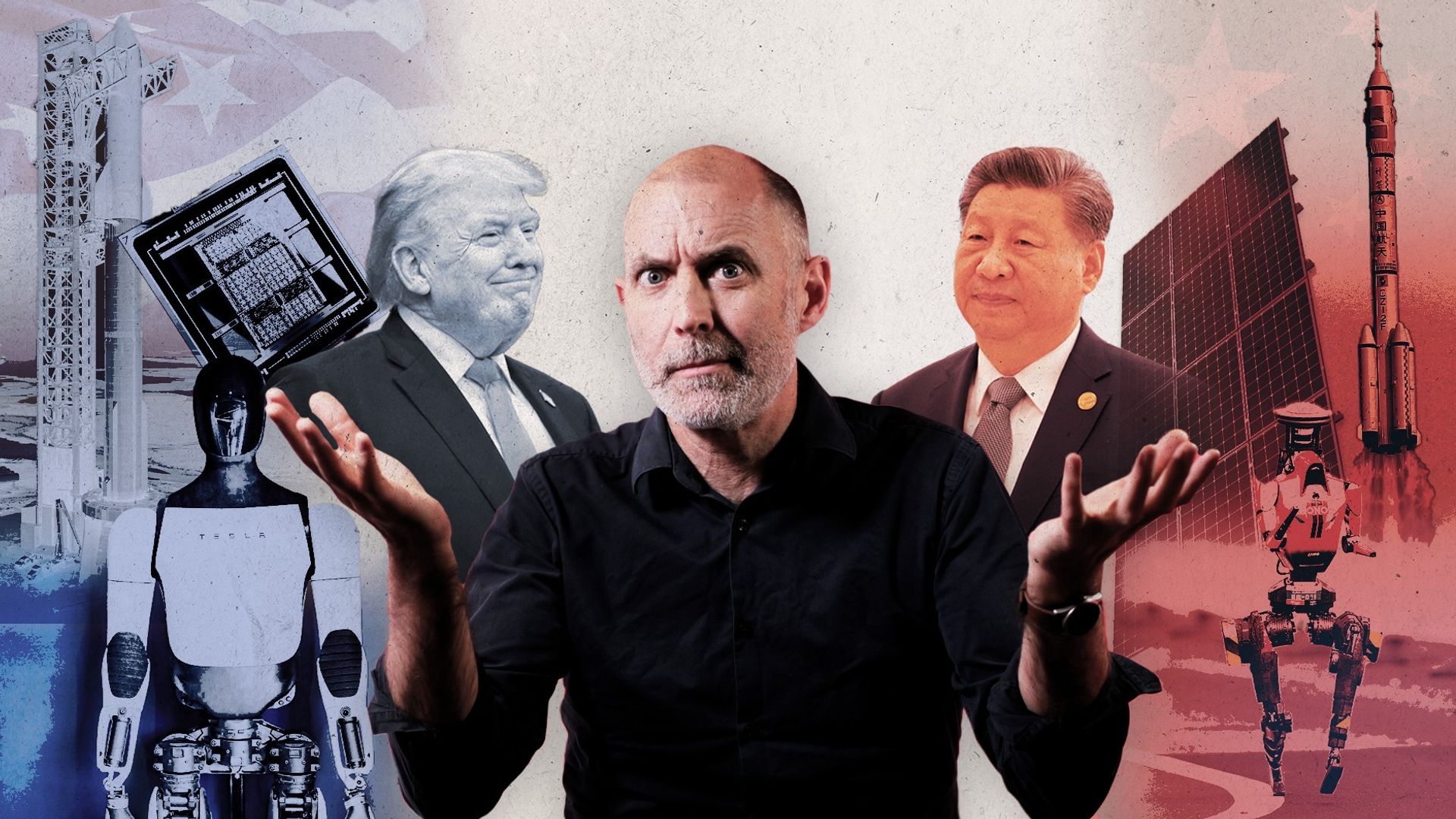
Trump's Policies Risk U.S. Tech Dominance Amidst China Competition
Coveragetap to expand ▾Spectrum: Center Only🌍Other: 1
- China has significantly increased its investment in technology sectors, aiming to surpass the U.S. in key areas like artificial intelligence and quantum computing (per news.sky.com).
- The U.S. tech industry faces challenges in maintaining its competitive edge due to regulatory hurdles and supply chain disruptions caused by trade tensions (per news.sky.com).
- The ongoing competition between the U.S. and China is reshaping global tech supply chains, with companies reevaluating their dependencies (per news.sky.com).
- The Biden administration is exploring new strategies to bolster U.S. tech leadership while addressing the challenges posed by China's rise (per news.sky.com).
The competition between the United States and China in technology is intensifying, with significant implications for global economic leadership. The Trump administration's tariffs on Chinese goods, intended to protect American industries, have instead created vulnerabilities for U.S. tech companies that rely on Chinese components.
As China ramps up its investment in technology sectors, aiming to surpass the U.S. in critical areas such as artificial intelligence and quantum computing, American firms are feeling the pressure. Analysts argue that the U.S. must adopt a more collaborative approach with allies to effectively counter China's advancements.
The current landscape is forcing U.S. tech companies to reevaluate their supply chains and dependencies, as trade tensions continue to disrupt established practices. Meanwhile, the Biden administration is considering new strategies to reinforce U.S. tech leadership and address the challenges posed by China's rise.
This evolving situation underscores the need for a comprehensive response to maintain American innovation and economic dominance in the face of fierce competition.
- U.S. tech companies face increased costs and supply chain disruptions due to tariffs, impacting their competitiveness (per news.sky.com).
- China's investments in technology threaten to outpace U.S. advancements, potentially leading to a loss of global tech leadership (per news.sky.com).
- The shift in global tech supply chains could disadvantage American workers and industries reliant on international partnerships (per news.sky.com).
- Whether the Biden administration implements new strategies to bolster U.S. tech leadership by the end of 2026.
- Upcoming decisions by major U.S. tech companies regarding their supply chain strategies in response to ongoing trade tensions.
- {"framing":[],"numbers":[],"causality":[],"attribution":[],"omitted_context":[],"disputed_or_unclear":[],"notable_quotes_or_claims":[]}