
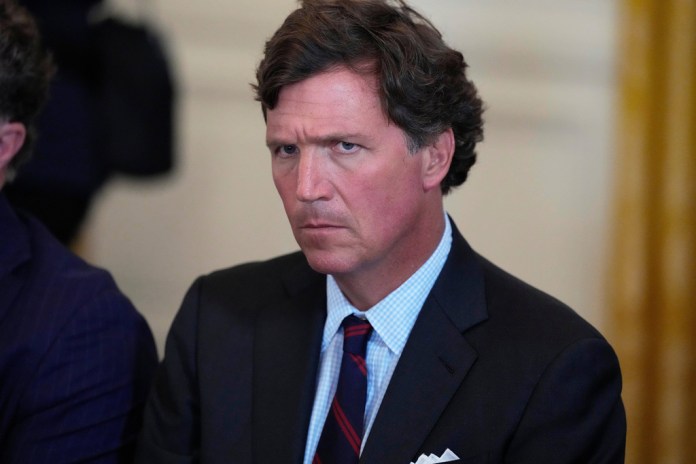
Tucker Carlson Criticizes Iran War on Megyn Kelly Show Amid Censorship Debate
Coveragetap to expand ▾Spectrum: Mixed🌍US: 3 · Other: 1
- Carlson criticized the war, though specific details of his critique were not provided in the sources (per Mediaite).
- The discussion on censorship was framed as a response to increasing political pressure to control online discourse (per Daily Caller).
The conversation also touched upon a bipartisan initiative to regulate 'hate speech' online, which both Carlson and Kelly strongly opposed, framing it as a threat to free speech. Megyn Kelly, during the same segment, expressed her distrust of Donald Trump's statements regarding Iran, highlighting a perceived lack of credibility.
This skepticism adds another layer to the complex political narratives surrounding the conflict, as various media figures and politicians continue to debate the United States' role and strategy.
The discussion on censorship comes amid increasing political pressure to address online discourse, with some lawmakers advocating for stricter regulations to combat what they describe as 'hate speech.' Carlson and Kelly's opposition to this push reflects a broader concern among certain political commentators about the potential for such measures to infringe on free speech rights.
This debate over censorship is part of a larger conversation about the balance between maintaining public safety and protecting individual freedoms, a topic that has gained significant traction in recent years.
The bipartisan nature of the censorship initiative suggests a rare point of agreement across political lines, though it remains contentious among media personalities and civil liberties advocates. As the war in Iran continues, media figures like Carlson and Kelly play a crucial role in shaping public opinion and influencing political discourse.
Their criticisms and concerns highlight the ongoing tensions between government actions and media narratives, particularly in the context of international conflicts and domestic policy debates.
The intersection of these issues—foreign policy, media freedom, and online regulation—illustrates the complex landscape of modern political discourse, where multiple narratives and interests collide. As these discussions evolve, they will likely continue to influence both public perception and policy decisions in the United States.
- American citizens bear the concrete costs of the Iran war through military expenditures and potential loss of life, affecting national security and economic stability.
- Media figures like Tucker Carlson and Megyn Kelly influence public opinion and political discourse, potentially swaying public sentiment and policy decisions.
- The bipartisan push to regulate 'hate speech' online could impact free speech rights, affecting how individuals and organizations communicate and express dissent.
- Whether Tucker Carlson continues to criticize the Iran war in future media appearances.
- The progression of the bipartisan initiative to regulate 'hate speech' online and its potential legislative outcomes.
- Any shifts in public opinion or policy regarding the Iran conflict as influenced by media figures like Carlson and Kelly.
Left- and right-leaning outlets are covering this story differently — in which facts to emphasize, which context to include, and how to frame causes and consequences.
3 specific areas where coverage diverges — see below.
- Mediaite focuses on Megyn Kelly's distrust of Trump's credibility on Iran, while Tampa Free Press and Daily Caller emphasize the censorship debate.
- Specific details of Tucker Carlson's critique of the Iran war were not provided in the sources.
- No source mentions the specific actions or policies of the Iran war that Tucker Carlson criticized.
- The sources do not provide detailed context on the bipartisan censorship initiative's origins or specific legislative proposals.