
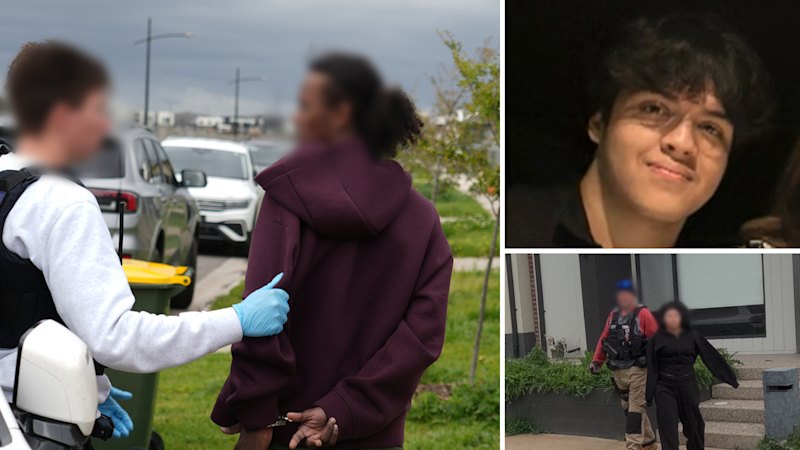
Two teenagers charged in shooting death of Marco Tapia as gun links four Melburnians to Glen Alpine
Topic: generalRegion: asia pacificUpdated: i2 outletsSources: 2Spectrum: Center Only⏱ 3 min read
Story Summary
SITUATION
Two teenagers were charged with murder after police say they shot and killed Marco Tapia in his Glen Alpine home, and detectives linked a firearm recovered at the scene to four Melburnians being extradited to NSW (per smh.com.au). Ballistics tied discharged cartridge cases from Hurstville and Turrella to the Glen Alpine homicide scene and investigators are still assessing whether the Victorians can be charged over the killing (per smh.com.au).
Coveragetap to expand ▾Spectrum: Center Only🌍US: 1 · Asia: 1
Political Spectrum
Position is inferred from coverage mix.
i2 outlets · Center
Left
Center
Right
Left: 0
Center: 2
Right: 0
Geography Coverage
Distribution of where coverage is coming from.
i2 unique outlets · Dominant: US/Canada
KEY FACTS
- Marco Tapia, 23, was shot dead while in bed at his family’s Sydney home (per smh.com.au).
- Two teenagers were charged with murder over the incident and were remanded in custody to face court again on November 13 (per smh.com.au).
- NSW Police said the wrong address was targeted and Tapia’s killing is believed to have been a botched organised-crime killing (per smh.com.au).
- Ballistic analysis found discharged cartridge cases at Hurstville and Turrella matched and were positively mapped to the Glen Alpine homicide scene (per smh.com.au).
- Subsequent ballistic examination confirmed the firearm found at Glen Alpine discharged rounds recovered from all three crime scenes (per smh.com.au).
HISTORICAL CONTEXT
An active pattern of organised‑crime gun violence across New South Wales and Victoria has made inter‑jurisdictional ballistics and extradition work central to ongoing investigations, with police increasingly relying on cartridge‑case matching to tie shootings together.
The structural framework governing that work rests on the National Firearms Agreement, adopted after the Port Arthur massacre on 28 April 1996, which reshaped state firearm laws and reporting; on state criminal‑law provisions that allow interstate surrender and transfer of suspects; and on nationally shared forensic systems that permit cross‑jurisdictional ballistic comparisons.
Brief
Police investigators say two teenagers shot and killed 23-year-old Marco Tapia in his Glen Alpine home; homicide detectives have since linked the firearm recovered at the scene by ballistics to rounds used in two other shootings in Hurstville and Turrella.
New South Wales authorities charged the two teenagers with murder and remanded them in custody; a court date for their next appearance is set for November 13, according to police statements reported by smh.com.au.
In Melbourne Magistrates’ Court, prosecutors told judges that Vaifaalie Tuafuti, Omar Mohamed, Amenah Abusud and a child have been connected to the same gun and are being extradited to NSW, though detectives are still determining whether those Victorians can be charged in Tapia’s killing.
NSW Police described the attack as a botched organised‑crime hit that targeted the wrong address, framing Tapia as an innocent victim killed in a possible gangland dispute (per smh.com.au).
Ballistic work linked discharged cartridge cases across three crime scenes and later matched test‑fired rounds from the Glen Alpine firearm to those scenes, giving investigators what they called a forensic chain tying the Melbourne suspects to weapons evidence (per smh.com.au).
The prosecution in Melbourne presented the four as having worked for the Alameddine crime family in violence directed at the so‑called Coconut Cartel, an allegation recorded in the court summary read out during Amenah Abusud’s extradition hearing (per smh.com.au).
At this stage, police have publicised the forensic connections and extradition moves but have not yet publicly charged the four Victorians with Tapia’s murder; investigators continue to assess whether the evidence supports murder charges in NSW (per smh.com.au).
Why it matters
- Residents of Glen Alpine bear the concrete cost: an innocent university student, Marco Tapia (23), was killed in his family home when police say the wrong address was targeted, demonstrating how botched organised‑crime attacks directly kill civilians (per smh.com.au).
- Victorian suspects face extradition and possible prosecution: Vaifaalie Tuafuti, Omar Mohamed, Amenah Abusud and a child are being sent to NSW tied by ballistics to the Glen Alpine firearm, which could broaden the legal reach of NSW homicide detectives (per smh.com.au).
- Forensic evidence is the mechanism linking geographically separate crimes: ballistic matches between Glen Alpine, Hurstville and Turrella connect multiple shootings to a single firearm, strengthening prosecutors’ cases (per smh.com.au).
What to watch next
- Whether NSW prosecutors file murder charges against Vaifaalie Tuafuti, Omar Mohamed, Amenah Abusud or the child after extradition to NSW.
- Whether the two teenagers charged with murder appear at their next scheduled court date on November 13 and the evidence presented then (per smh.com.au).
- Whether further ballistic or forensic testing produces additional crime‑scene links or identifies other individuals connected to the firearm used at Glen Alpine (per smh.com.au).
Where sources differ
7 dimensionsFraming differences
?- Only smh.com.au is in this pack; it frames the killing as a botched organised‑crime hit that targeted the wrong address and links Melbourne suspects by ballistics to the firearm used in the Glen Alpine murder (per smh.com.au).
Disputed or unclear
?- No source in this pack disputes the ballistic matches, but whether the Melbourne suspects will be charged in Tapia’s murder remains under assessment and unconfirmed (per smh.com.au).
Omitted context
?- No source in this pack detailed the identities or status of the two teenagers charged (names, ages beyond 'teenagers') or the precise dates of the Melbourne extradition hearings beyond what was reported; readers lack the defendants’ full legal histories and any statements from Tapia’s family.
- No source mentioned any broader police taskforces, prior shootings immediately preceding these incidents, or whether other jurisdictions have open files connected to the same firearm.
Conflicting figures
?- Only one explicit number appears for the victim’s age (23) and the court date of November 13; no alternative figures are provided across outlets in this pack (per smh.com.au).
Disputed causality
?- smh.com.au reports NSW Police view the killing as a botched organised‑crime hit that targeted the wrong address; there is no alternate source in this pack assigning different cause or motive (per smh.com.au).
Attribution disputes
?- smh.com.au attributes the link between the Melbourne suspects and the firearm to evidence presented in Melbourne Magistrates’ Court and to ballistic testing (per smh.com.au).
Sources
2 of 2 linked articles
‘Significant persons of interest’: Victorians linked to gun used in killing of Sydney student
smh.com.au12h agoCenter
↗
Two boys aged 14 and 16 charged with murder after student Marco Tapia was allegedly shot dead inside his Glen Alpine home in case of mistaken identity - dailymail.com
dailymail.comSep 16Left
↗