
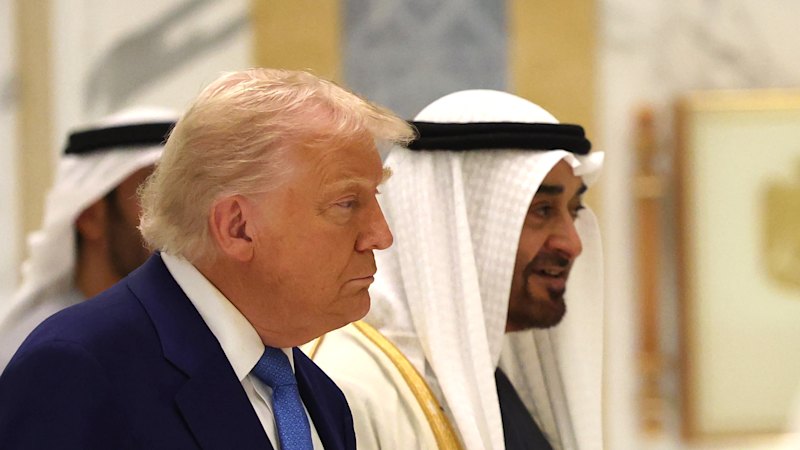
UAE Exits OPEC, Aligns with Trump's Anti
Coveragetap to expand ▾Spectrum: Left Only🌍Asia: 1
- Donald Trump has been actively trying to break the OPEC oil cartel (per smh.com.au).
- The UAE was the third-largest producer within OPEC, having joined the organization in 1967 (per smh.com.au).
The United Arab Emirates' decision to leave the Organisation of Petroleum Exporting Countries (OPEC) on May 1 marks a significant shift in the global oil landscape, aligning with Donald Trump's ongoing efforts to dismantle the influential oil cartel.
This move by the UAE, a key player as the third-largest producer within OPEC, underscores longstanding internal tensions and dissatisfaction with the organization's direction under Saudi Arabia's leadership. The UAE's departure from OPEC is not merely a reaction to internal disputes but also a strategic alignment with the United States' interests.
Donald Trump has been vocal about his desire to weaken OPEC, viewing the cartel as a barrier to free market oil pricing. The UAE's exit serves this agenda by potentially destabilizing the cartel's cohesion and influence. Historically, the UAE has invested heavily in its oil infrastructure, aiming to increase its production capacity significantly.
However, internal OPEC quotas often left a substantial portion of this capacity unused, leading to economic inefficiencies and frustration. This underutilization of resources was a major point of contention between the UAE and Saudi Arabia, culminating in a public clash in July 2021.
The UAE's decision reflects its broader economic strategy to maximize its oil production capabilities and assert greater control over its energy resources. By leaving OPEC, the UAE can now independently set its production levels, potentially increasing its market share and revenues.
This development also highlights the shifting dynamics within the global oil market, where traditional alliances are being reevaluated in light of new geopolitical and economic realities. The UAE's move could inspire other OPEC members dissatisfied with Saudi Arabia's leadership to reconsider their positions, potentially leading to further fragmentation within the cartel.
While the UAE's exit aligns with Trump's anti-OPEC strategy, it also raises questions about the future stability of oil prices and the potential for increased volatility in the market. As the UAE pursues its independent path, the global oil industry will be closely watching how this decision impacts both OPEC's influence and the broader energy market.
- The UAE's exit from OPEC could lead to increased oil market volatility, affecting global oil prices and economies dependent on oil imports.
- Saudi Arabia's leadership within OPEC faces challenges as other member countries may reconsider their positions, potentially weakening the cartel's influence.
- Donald Trump's strategy to weaken OPEC gains momentum, potentially reshaping global energy alliances and market dynamics.
- The UAE stands to benefit economically by independently setting its oil production levels, potentially increasing its market share and revenues.
- Whether other OPEC members follow the UAE's lead and reconsider their membership.
- The impact of the UAE's increased oil production on global oil prices in the coming months.
- Potential diplomatic responses from Saudi Arabia and other OPEC members to the UAE's departure.
- No source mentions the specific economic impacts on other OPEC member countries following the UAE's departure.
- The potential influence of non-OPEC oil producers on the global market dynamics post-UAE exit is not discussed.