
Russia's Refining Capacity Declines Amid Ongoing Conflict with Ukraine
Topic: geopoliticsRegion: EuropeUpdated: i5 outletsSources: 18Spectrum: Mostly Center⏱ 4 min read📡 Wire pickup: 3⚠ 3d+ old
Story Summary
SITUATION
Reports indicate that Russia has lost approximately 10% of its refining capacity due to ongoing military actions. This decline coincides with Ukraine's recent drone strikes targeting Russian infrastructure.
Coveragetap to expand ▾Spectrum: Mostly Center🌍Other: 8 · Europe: 4 · US: 3 · Asia: 3
Political Spectrum
Position is inferred from coverage mix.
i5 outlets · Center
Left
Center
Right
Left: 3
Center: 15
Right: 0
Geography Coverage
Distribution of where coverage is coming from.
i5 unique outlets · Dominant: Global
KEY FACTS
- Russia has reportedly lost about 10% of its refining capacity (per timesofindia.indiatimes.com).
- Ukraine launched drone strikes targeting Russian infrastructure, contributing to the loss of refining capacity (per straitstimes.com).
- Ukraine claims to have downed 269 drones in a single night, indicating an escalation in drone warfare (per news.google.com).
- The ongoing conflict has led to significant damage to both Russian and Ukrainian infrastructure (per news.google.com).
- Ukrainian President Volodymyr Zelensky has ordered military responses following Russian attacks (per news.google.com).
- The conflict has intensified with both sides launching strikes against each other's critical infrastructure (per timesofindia.indiatimes.com).
HISTORICAL CONTEXT
The recent Russian strikes that resulted in the death of one person and injuries to several others in Ukraine's southeastern Zaporizhzhia region are a stark reminder of the ongoing volatility in the Ukraine-Russia conflict, despite a recently declared ceasefire. This ceasefire, brokered by former U.S.
President Donald Trump, was intended to provide a temporary pause in hostilities, coinciding with Russia's Victory Day celebrations. However, the fragile nature of this ceasefire has been underscored by continued military engagements and accusations of violations from both sides.
Brief
Recent reports suggest that Russia has lost approximately 10% of its refining capacity, a significant decline attributed to ongoing military actions amid the conflict with Ukraine. This loss comes as Ukraine has intensified its drone strikes targeting Russian infrastructure, aiming to disrupt operations and retaliate against Russian attacks.
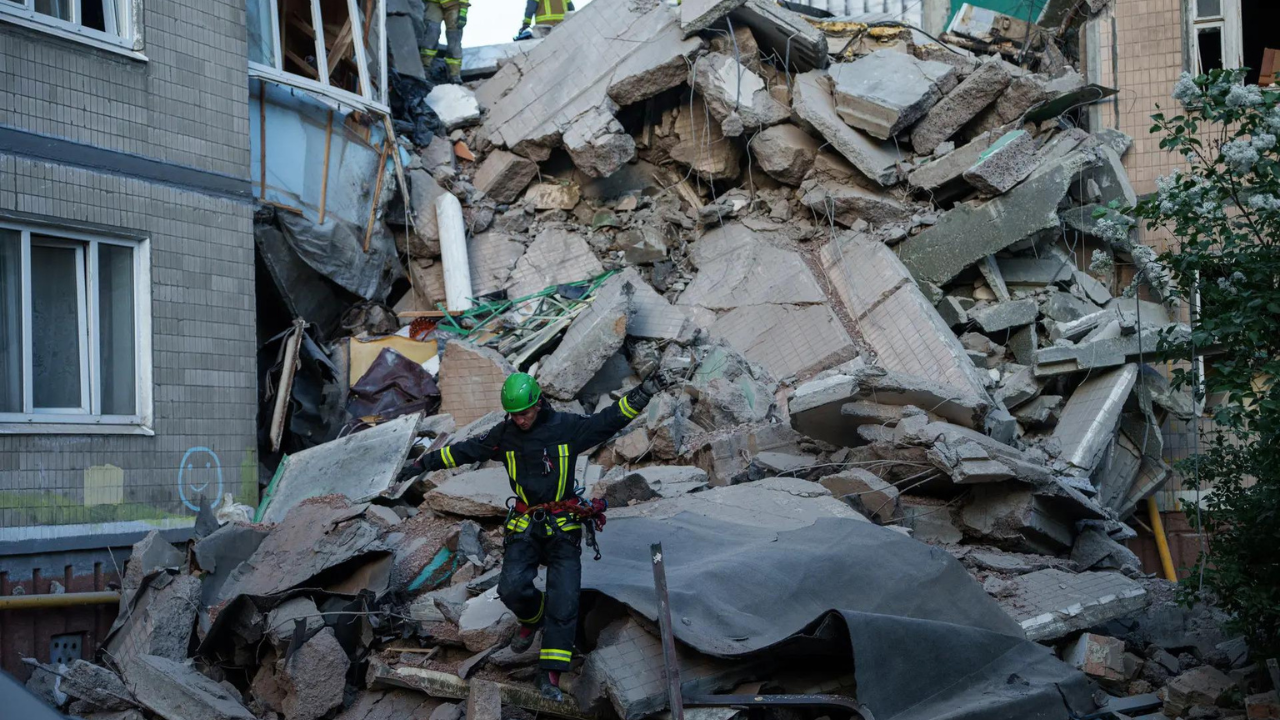
In a notable incident, Ukraine successfully downed 269 drones in a single night, showcasing the escalating nature of aerial warfare between the two nations. Concurrently, Russian airstrikes have damaged critical port infrastructure in Ukraine's Izmail city, further complicating the already strained logistics of both countries.
Ukrainian President Volodymyr Zelensky has responded to these developments by ordering military actions aimed at countering Russian offensives. The situation remains fluid, with both sides engaged in a tit-for-tat exchange of strikes that continues to impact their respective infrastructures.
The ongoing conflict has not only affected military capabilities but has also led to significant economic repercussions for both nations, as they grapple with the consequences of sustained military engagements.
Why it matters
- The loss of 10% of Russia's refining capacity could lead to fuel shortages, impacting the Russian economy and military operations.
- Ukrainian civilians in areas targeted by Russian airstrikes face increased risks of casualties and infrastructure damage.
- The escalation in drone warfare may lead to higher military expenditures for both Russia and Ukraine, diverting resources from civilian needs.
- The damage to Ukrainian port infrastructure could disrupt grain exports, affecting global food supply chains and prices.
- Both nations are likely to experience prolonged economic strain as military actions continue to escalate.
What to watch next
- Whether Ukraine continues its drone strikes targeting Russian infrastructure in the coming weeks.
- Any announcements from the Russian government regarding measures to mitigate the loss of refining capacity.
- Developments in military responses ordered by Ukrainian President Volodymyr Zelensky following Russian attacks.
- The impact of damaged port infrastructure on Ukrainian grain exports and global food prices.
- Reports on the economic consequences of the ongoing conflict for both Russia and Ukraine.
Where sources differ
2 dimensionsFraming differences
?- Times of India emphasizes the loss of refining capacity, while other sources focus on the immediate military actions occurring in Ukraine.
Omitted context
?- No source mentions the specific prior military actions that led to the current escalation in drone warfare.
Sources
18 of 18 linked articles
Has Russia lost 10% of its refining capacity? Ukraine launches drones as Moscow attacks Danube port city
timesofindia.indiatimes.comMay 19Left
↗
Russia attacks Ukraine's Danube port, Ukraine launches drones towards Moscow
straitstimes.comMay 19Left
↗
Ukraine can down Russian drones en masse but missiles are a problem
msn.comMay 17Left
↗
Ukraine downs 130 drones in major overnight attack
msn.comMay 16Left
↗
Ukraine downs hundreds of drones overnight, Air Force says
newsukraine.rbc.uaMay 16Left
↗
Ukraine downs 269 drones overnight as strikes hit 15 locations
english.nv.uaMay 16Left
↗