
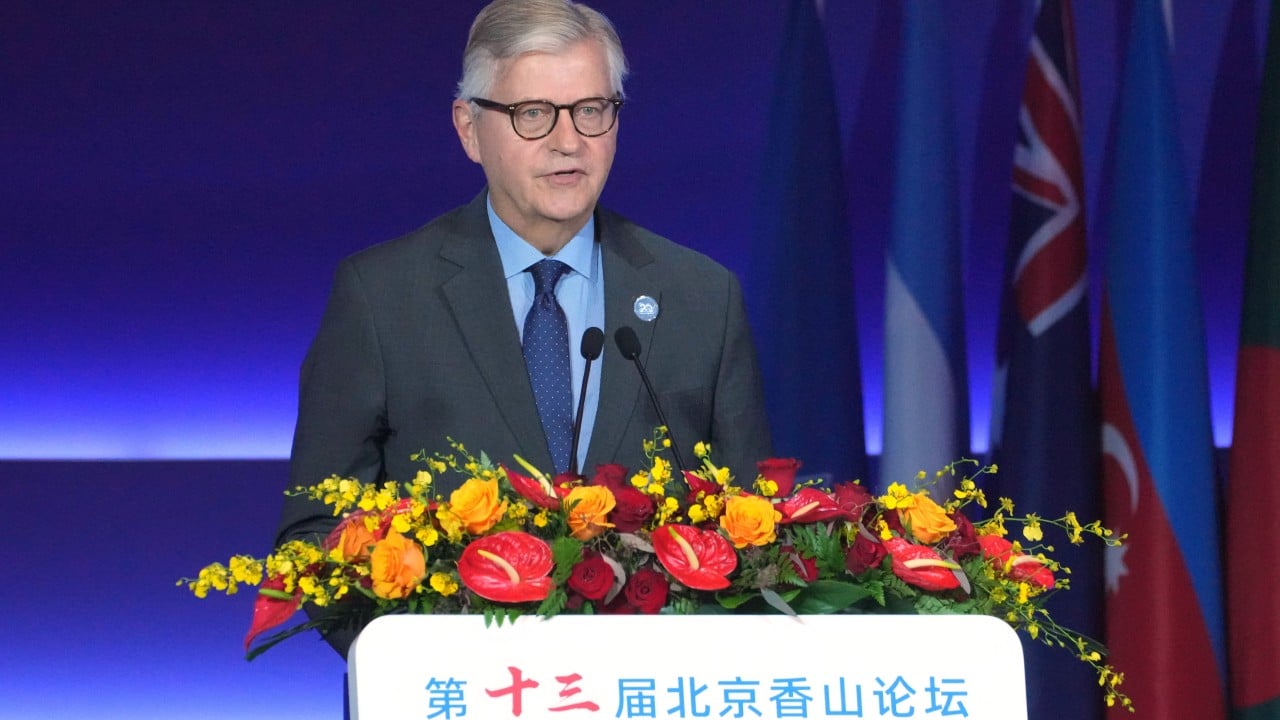
US cuts to UN peacekeeping funding leave UN leaning on China amid severe strain
Coveragetap to expand ▾Spectrum: Center Only🌍Asia: 1
- Jean-Pierre Lacroix is UN Under-Secretary-General and warned the UN is under severe financial strain (per scmp.com).
- Lacroix said the United Nations can count on China’s support (per scmp.com).
UN under-secretary-general Jean-Pierre Lacroix told reporters that the organisation is under severe financial strain after the United States slashed funding for UN peacekeeping, and he said the UN can count on China’s support. Lacroix framed the problem in operational terms: with steadily fewer resources the UN cannot deliver the same results and must adapt its tools.
He called explicitly for the UN to be "efficient, disciplined, transparent and accountable," language aimed at donors and member states weighing whether to step in. The single source quotes Lacroix making China a named partner for sustaining peacekeeping finance, a notable public recognition of Beijing’s growing role in UN funding amid shortfalls.
The report does not quantify the US funding cut or list other donor responses, and it does not include remarks from US, Chinese, or other member-state officials to corroborate or contest Lacroix’s assessment.
Analysts and operations staff will likely view Lacroix’s appeal as both a budgeting signal to capitals and a practical warning to field missions that capabilities may be reduced if pledges do not materialize.
How quickly any funding gap is closed will depend on specific donor commitments and UN budget processes, neither of which the source details; Lacroix’s public naming of China signals a diplomatic balancing act as the UN seeks alternatives to traditional major funders.
The immediate, documented consequence in the source is a public admission of strain and an appeal for efficiency and accountability, not a confirmed shift in mission mandates or troop levels (per scmp.com).
- UN peacekeeping missions and the uniformed personnel who serve in them face concrete risk of reduced capabilities if US funding cuts are not offset — Lacroix warned the UN cannot deliver the same results with fewer resources (per scmp.com). 2) China stands to benefit politically by being named a reliable funding partner, strengthening its influence within UN budgeting and operations if it follows through on support (per scmp.com). 3) Populations protected by UN peacekeepers — local civilians in mission areas — bear the direct costs through a specific mechanism: potential reductions in mission capacity and services if donor shortfalls persist (per scmp.com).
Whether China provides explicit new funding commitments to UN peacekeeping by the next UN budget cycle or a named UN deadline (per scmp.com). 2) Whether the United States or other major contributors restore or replace the funding cut identified by Jean-Pierre Lacroix in upcoming donor consultations at the UN (per scmp.com). 3) Whether the UN Secretariat announces specific adjustments to peacekeeping mandates, troop levels, or mission tools tied to the funding shortfall cited by Lacroix (per scmp.com).
- Only scmp.com is in this pack; it frames the story as a crisis signal from Jean-Pierre Lacroix naming China as a backstop and blaming a US funding cut.
- The size, timing and exact nature of the United States' funding reduction are not specified in the source and therefore remain unverified.
- No source in this pack quantifies the US funding cut or lists which UN missions or budgets are affected.
- No source mentions any confirmed financial pledge or timetable from China to fill gaps.
- No source cites statements from US, Chinese, or other member-state officials responding to Lacroix’s remarks.
- No source provides data on civilian protection outcomes tied to specific mission resource levels.
- No differing figures are provided in the single source; the scmp.com excerpt contains no numeric values for funding cuts or mission impacts.
- The source states: 'The United States slashed funding for UN peacekeeping' → Lacroix warned the UN is under severe financial strain and said it can count on China’s support (per scmp.com).
- Jean-Pierre Lacroix attributes the strain to US funding cuts and names China as a partner for support (per scmp.com).