
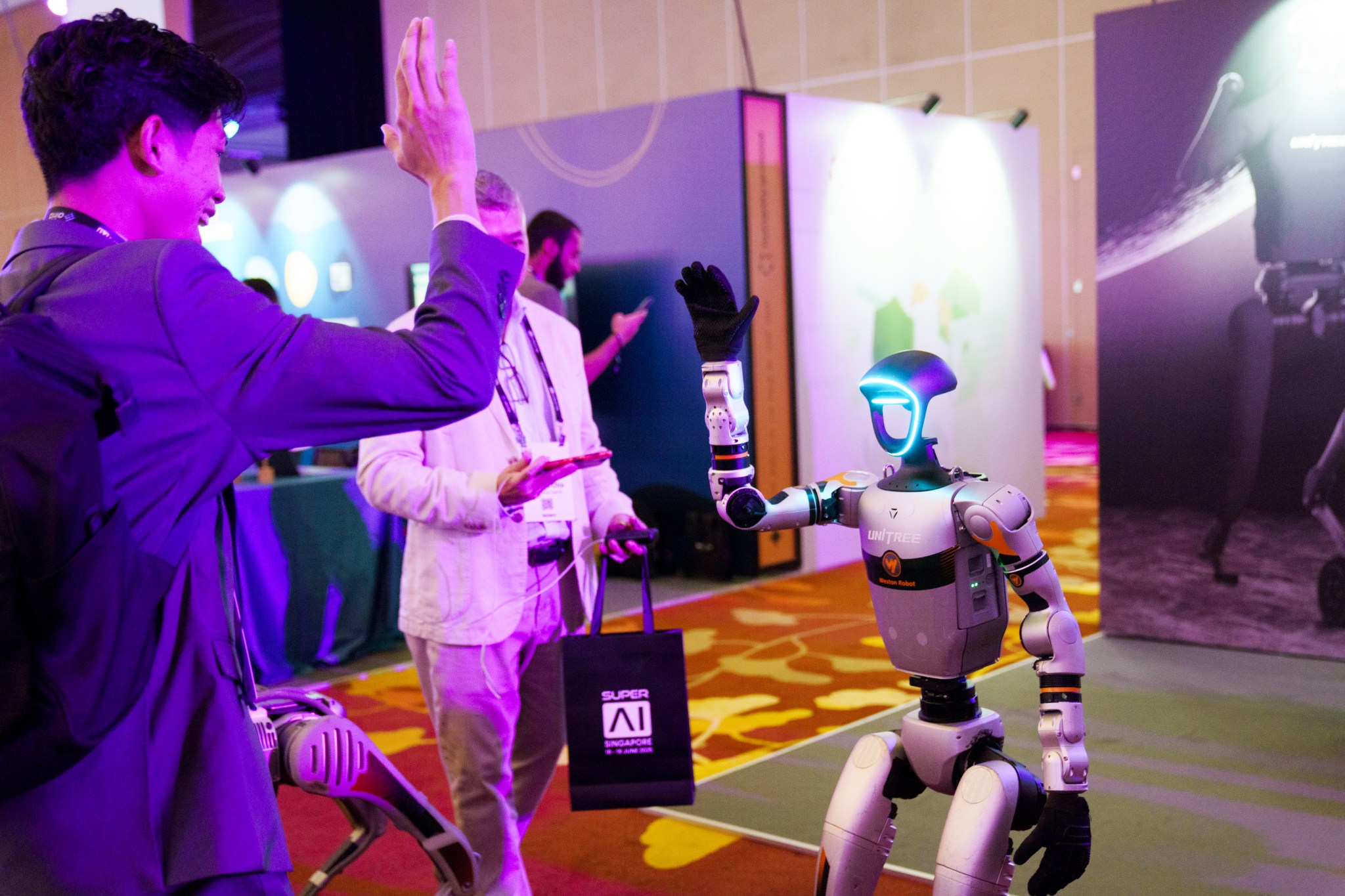
U.S. and Chinese AI Firms Establish Operations in Singapore's Tech Hub
Topic: technologyRegion: AsiaUpdated: i2 outletsSources: 3Spectrum: Center Only⏱ 4 min read
Story Summary
SITUATION
The establishment of U.S. and Chinese AI firms in Singapore's tech hub highlights the city-state's strategic role as a neutral ground in the escalating tech rivalry, potentially reshaping global AI collaboration and competition.
Coveragetap to expand ▾Spectrum: Center Only🌍Other: 3
Political Spectrum
Position is inferred from coverage mix.
i2 outlets · Center
Left
Center
Right
Left: 0
Center: 3
Right: 0
Geography Coverage
Distribution of where coverage is coming from.
i2 unique outlets · Dominant: Global
KEY FACTS
- Both U.S. and Chinese AI firms are setting up shop in Singapore. Can the country become Asia’s neutral AI hub?
- and Chinese AI firms are setting up shop in Singapore. Can the country become Asia’s neutral AI hub?
HISTORICAL CONTEXT
As of 2026, the global landscape for artificial intelligence (AI) is heavily influenced by the ongoing technological rivalry between the United States and China. This competition has intensified since the mid-2010s, with both nations striving for dominance in AI research, development, and deployment.
In 2023, the U.S. government implemented a series of export controls targeting advanced semiconductor technology, which are crucial for AI applications, aimed at curbing China's technological advancements. This move was part of a broader strategy to maintain U.S. leadership in high-tech industries and to mitigate national security risks associated with Chinese technology firms.
Brief
In a significant move for the tech industry, both U.S. and Chinese AI firms are establishing operations in Singapore, aiming to capitalize on the city-state's reputation as a neutral hub for international business.
This expansion includes major players like OpenAI and Google DeepMind, which have set up applied AI labs in Singapore over the past year, while Anthropic is actively recruiting for local positions in finance and product support.
Additionally, Chinese firms such as Tencent are increasing their investments in the region, further solidifying Singapore's role as a key player in the global AI landscape.
The strategic importance of Singapore is underscored by its long-standing commitment to being a trusted partner for businesses from various countries, making it an attractive destination for AI companies looking to expand their reach.
Gunja Gargeshwari, the chief revenue officer of an Israel-based AI company, emphasized that AI firms from China, Korea, and Japan are also utilizing Singapore as a central hub for their operations. This trend reflects a broader shift in the tech industry, where companies are seeking stable environments to foster innovation and collaboration amidst geopolitical tensions.
As the competition for AI dominance intensifies, Singapore's ability to maintain its neutral stance will be crucial in attracting further investments and talent in the coming years.
Why it matters
- The establishment of U.S. and Chinese AI firms in Singapore positions the city-state as a potential neutral ground for technological collaboration amid escalating tensions between the two superpowers.
- This development could attract talent and investment, bolstering Singapore's economy while providing local startups access to cutting-edge AI technologies.
- For Singaporean businesses and researchers, this influx may enhance innovation opportunities and create a more competitive landscape, but it also raises concerns about dependency on foreign tech giants and the implications of their geopolitical agendas.
What to watch next
- Watch for announcements from major U.S. AI firms regarding new partnerships with local Singaporean startups within the next month, as they seek to integrate into the regional tech ecosystem.
- Expect Chinese tech giants to unveil their investment plans in Singapore's AI sector during the upcoming Asia Tech Summit scheduled for next week.
- Monitor Singapore's government for potential regulatory updates on foreign AI operations, anticipated to be released within the next 72 hours, which could impact operational frameworks.
- Look for quarterly earnings reports from U.S. tech companies in the next earnings cycle, which may highlight their international expansion strategies, including moves in Singapore.
- Anticipate a joint press conference from U.S. and Chinese firms operating in Singapore before the June summit, focusing on collaborative AI initiatives and regional development goals.
Sources
3 of 3 linked articles
Both U.S. and Chinese AI firms are setting up shop in Singapore. Can the country become Asia’s neutral AI hub?
fortune.comJun 19Left
↗
Yum China takes full control of Pizza Hut China in $1.2b acquisition
retailasia.comJun 18Left
↗
Shaw Investment A.P.A.C. and InCorp Singapore Strengthen China-Singapore-ASEAN Innovation Corridor to Support the Global Expansion of China's Next Generation Technology Enterprises
finance.yahoo.comJun 18Left
↗