
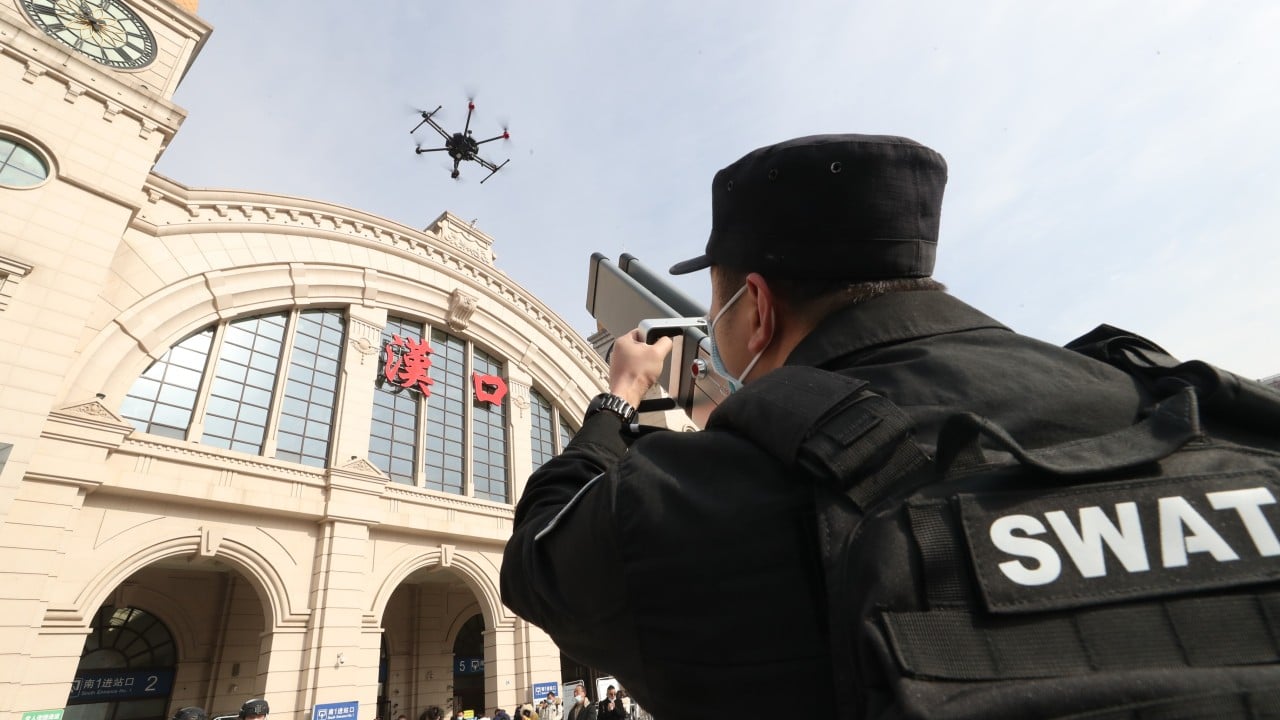
The suspects were arrested between January and March.
Coveragetap to expand ▾Spectrum: Mixed🌍US: 1 · Asia: 1
- The ministry said that in these cases, suspects used technical means to help others bypass restrictions on drone altitude and no-fly zones.
- The ministry accused the suspects of profiting illegally from these activities, disrupting airspace order and posing risks to public and national security.
The competition in geosynchronous orbit has intensified as the United States, China, and now Russia ramp up their satellite capabilities. For over a decade, the US military has utilized a fleet of inspector satellites designed to approach and photograph other spacecraft, a strategy aimed at maintaining an edge in space intelligence.
China entered this arena in 2018, launching its own satellites for similar purposes, which has heightened the stakes in this critical domain. Recently, Russia has joined the fray with the deployment of its own suspected inspector satellite, marking a significant escalation in the competition among these space powers.
The US Space Force is reportedly preparing to expand its reconnaissance satellite fleet, indicating a commitment to counter any potential threats posed by Russian and Chinese advancements.
This growing rivalry is not merely about technological superiority; it reflects broader geopolitical tensions as each nation seeks to assert its influence and monitor the activities of the others.
While Russia's previous focus in geosynchronous orbit was primarily on eavesdropping on communications, its recent actions suggest a shift towards more aggressive surveillance capabilities.
As these three nations continue to develop their satellite technologies, the implications for global security and space governance are profound, raising questions about the future of cooperation and conflict in outer space.
- The arrests of 16 individuals for hacking drone systems highlight China's increasing focus on regulating drone usage, which is critical for maintaining airspace security and public safety.
- This crackdown directly impacts commercial drone operators and recreational users, as stricter enforcement of regulations may limit their operational capabilities and increase compliance costs.
- Additionally, the government's commitment to a "Clean Skies" initiative may foster a more secure environment for air traffic, potentially enhancing the safety of both civilian and military operations in the region.
- Watch for a statement from the Chinese government regarding new regulations on drone technology and usage, expected within the next two weeks.
- Anticipate a response from the U.S. Department of Defense concerning potential cybersecurity measures to counteract drone hacking threats, likely to be released before the upcoming NATO summit in July.
- Keep an eye on major drone manufacturers, such as DJI, as they may announce enhanced security features or partnerships aimed at preventing hacking incidents in their products within the next month.
- Expect a report from cybersecurity firms analyzing the implications of these arrests on global drone security standards, anticipated by the end of this quarter.
- Monitor international reactions from other countries regarding China's crackdown on drone hacking, particularly from Canada and Mexico, which may issue statements within the next 72 hours.