
U.S. Diplomat Advocates for Drone Strategy to Strengthen Taiwan's Defense Against China
Topic: geopoliticsRegion: AsiaUpdated: i4 outletsSources: 6⚠ Bias gap — sources divergeSpectrum: Mostly Center⏱ 4 min read📡 Wire pickup: 2
Story Summary
SITUATION
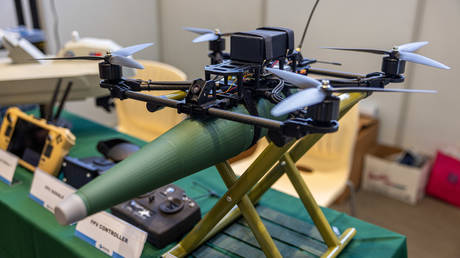
The top U.S. diplomat to Taiwan, Raymond Greene, emphasized the need for a 'hornet's nest' of drones to bolster Taiwan's defenses against China's threats.
Coveragetap to expand ▾Spectrum: Mostly Center🌍ME: 2 · US: 1 · Europe: 1 · Asia: 1 · Other: 1
Political Spectrum
Position is inferred from coverage mix.
i4 outlets · Center
Left
Center
Right
Left: 0
Center: 4
Right: 2
Geography Coverage
Distribution of where coverage is coming from.
i4 unique outlets · Dominant: Middle East
KEY FACTS
- A hornet's nest of drones is needed to save Taiwan from conflict, says US diplomat
- Taiwan says it needs to bolster its defenses in the face of a stepped-up threat from China, which claims the island as its own territory.
- The US and Taiwan can anchor "democratic" drone production and strengthen the collective deterrence posture of the free world, Greene said.
- The government has now proposed a new $6.59 billion package for surveillance, coastal attack, and small unmanned surface drones through the end of 2031.
- Its plan would fund drones from the main budget rather than a special budget, which is what the government wants.
- Taiwan needs a ‘hornet’s nest’ of drones to deter conflict, U.S. diplomat says
- diplomat says Taiwan needs a “hornet’s nest” of drones to help deter conflict and provide security, the top U.S.
- diplomat to the democratically governed island said on Thursday.
HISTORICAL CONTEXT
The immediate backdrop to the current advocacy for a drone defense strategy in Taiwan is the escalating military tensions between China and Taiwan, particularly since 2020. China has increasingly asserted its claim over Taiwan, conducting military exercises and sending warplanes into Taiwan's air defense identification zone (ADIZ) on a regular basis.
This aggressive posture has intensified since the election of Tsai Ing-wen as Taiwan's president in 2016, who has been viewed by Beijing as a pro-independence leader.
Brief
In a significant push for Taiwan's defense capabilities, Raymond Greene, the top U.S. diplomat to Taiwan, has advocated for the development of a 'hornet's nest' of drones to deter potential conflict with China.
Speaking at a drone forum in Taichung, Greene highlighted that these drones could represent a 'game-changing opportunity' for enhancing Taiwan's security and reinforcing peace in the region. This call comes as Taiwan faces a growing threat from China, which views the island as part of its territory and has ramped up military activities in the area.
The U.S., despite lacking formal diplomatic ties with Taiwan, has been a staunch supporter of the island's military modernization efforts, including a proposed $6.59 billion package aimed at bolstering its drone capabilities.
Greene emphasized that the collaboration between the U.S. and Taiwan in drone production could serve as a foundation for strengthening the collective deterrence posture of the free world. As tensions continue to rise in the Taiwan Strait, the urgency for Taiwan to enhance its defense mechanisms has never been more pronounced, with drones playing a pivotal role in this strategy.
The situation underscores the broader geopolitical dynamics at play, particularly the U.S. commitment to supporting democratic allies in the face of authoritarian pressures.
Where sources differ
Bias gap0.75 / 2.0
Left- and right-leaning outlets are covering this story differently — in which facts to emphasize, which context to include, and how to frame causes and consequences.
Center (4)
devdiscourse.comjapan_timesaljazeera.comreuters.com
Right-leaning (2)
jerusalem_post+0.75
A hornet's nest of drones is needed to save Taiwan from conflict, says US diplomat A hornet's nest of drones is needed to save Taiwan from conflict, says US diplomat A hornet's nes…
rt_world+0.70
US diplomat wants to turn Taiwan into ‘hornet’s nest of drones’ US diplomat wants to turn Taiwan into ‘hornet’s nest of drones’ US diplomat wants to turn Taiwan into ‘hornet’s nest…
Sources
6 of 6 linked articles
US diplomat wants to turn Taiwan into ‘hornet’s nest of drones’
rt.com12h agoRight
↗
A hornet's nest of drones is needed to save Taiwan from conflict, says US diplomat
jpost.comJul 2Right
↗
Taiwan's Drone Revolution: Crafting a Hornet's Nest for Defense
devdiscourse.comJul 2Left
↗
Taiwan needs a ‘hornet’s nest’ of drones to deter conflict, U.S. diplomat says
japantimes.co.jpJul 2Left
↗
Taiwan needs to become a ‘hornet’s nest’ of drones, US diplomat says
aljazeera.comJul 2Left
↗
Taiwan needs a 'hornet's nest' of drones to deter conflict, US diplomat says
reuters.comJul 2Left
↗