
U.S. House passes sanctions bill allowing up to 100% tariffs on India for Russian oil; MEA says it is monitoring
Coveragetap to expand ▾Spectrum: Center Only🌍Asia: 2
- The Bill will now be sent to President Donald Trump for his signature (per thehindu.com).
- The MEA warned the Bill's potential implications for not just the bilateral relationship but also the international energy market (per thehindu.com).
The U.S. House of Representatives passed the Sanctioning Russia and Iran Act, giving the U.S. President authority to impose tariffs of up to 100% on India and other buyers of Russian oil and gas — and the bill has been sent to President Donald Trump for his signature (per thehindu.com).
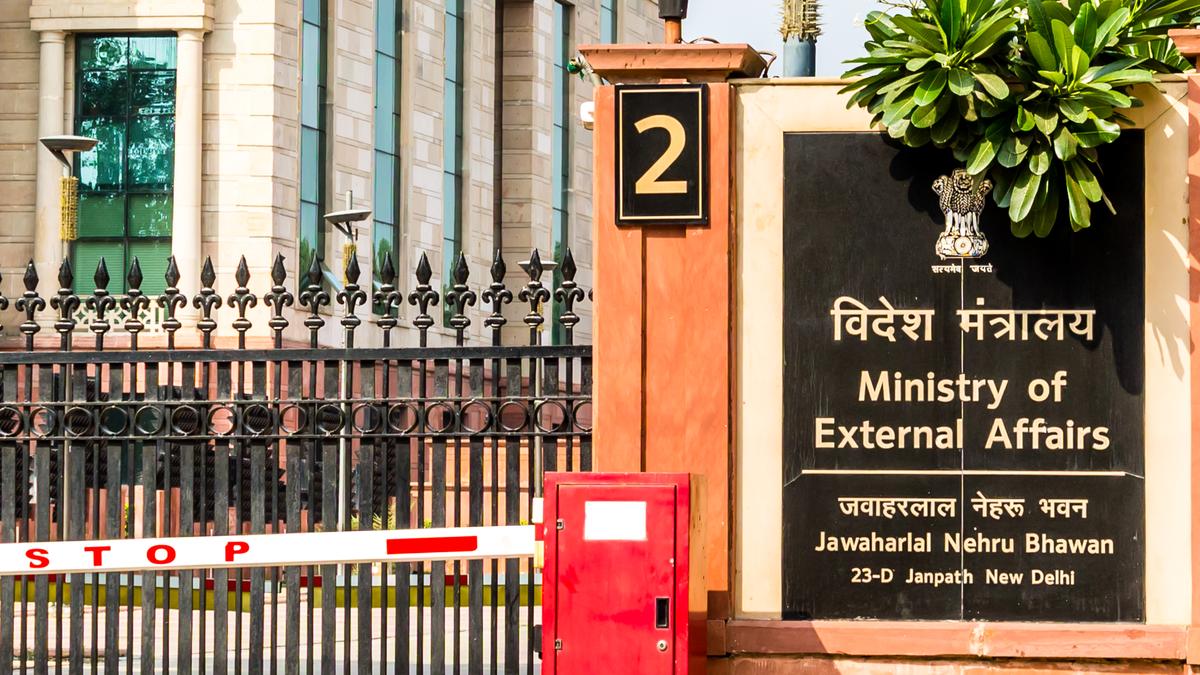
New Delhi's Ministry of External Affairs said on September 17, 2026 that it has noted the passage, has raised the matter with U.S. interlocutors and is monitoring developments (per thehindu.com).
The MEA’s statement explicitly warned that the bill could have implications for the bilateral relationship and the international energy market, signaling Delhi’s concern over immediate economic and diplomatic fallout (per thehindu.com).
The text reported by The Hindu places the decision squarely in U.S. hands: the legislation authorises the president to levy tariffs up to 100% on specified imports from countries purchasing Russian hydrocarbons (per thehindu.com).
The MEA framed its response as diplomatic engagement — noting, raising the issue with interlocutors and monitoring — rather than promising retaliatory measures, which limits what New Delhi has publicly committed to at this stage (per thehindu.com).
With the bill now on the president’s desk, the immediate next steps are procedural: either signature by President Donald Trump or a veto; the MEA’s focus on discussions with U.S. interlocutors indicates New Delhi aims to resolve the matter through diplomacy before any tariffs are applied (per thehindu.com).
The passage also introduces a concrete trade risk for Indian energy buyers and for companies tied to Russia-India energy deals; if implemented, 100% tariffs would raise import costs sharply and reshape contractual incentives in energy procurement, which the MEA explicitly highlighted as a potential impact on the international energy market (per thehindu.com).
- Indian energy importers bear the concrete cost: a 100% U.S. tariff on Russian oil imports would double import costs for companies buying Russian hydrocarbons (per thehindu.com).
- The Government of India (Ministry of External Affairs) bears diplomatic costs, having to escalate talks with U.S. interlocutors to avoid penalties that the MEA warned would affect bilateral ties (per thehindu.com).
- President Donald Trump stands to gain immediate policy leverage: the bill hands the president explicit authority to impose tariffs, concentrating decision power in the U.S. executive (per thehindu.com).
- Whether President Donald Trump signs the Sanctioning Russia and Iran Act or vetoes it; the bill is already on his desk (per thehindu.com).
- Whether the Ministry of External Affairs obtains concrete exemptions or assurances from U.S. interlocutors in talks that New Delhi says it has already raised (per thehindu.com).
- Whether the White House issues implementing guidance specifying which countries or imports would face tariffs and the timeline for imposition if the bill is signed (per thehindu.com).
- Only The Hindu is available in this pack; it frames the action as a U.S. legislative step and presents the MEA response as measured diplomatic monitoring (per thehindu.com).
- No source in this pack disputes the core facts of passage, presidential referral, or the MEA’s recorded response; absence of other outlets means cross-source disputes cannot be assessed (per thehindu.com).
- No source in this pack documents prior U.S. policy steps that triggered this bill or legislative history explaining why this bill was introduced now.
- No source in this pack provides concrete estimates of how many Indian companies or what volumes of Russian oil would be affected by a 100% tariff.
- No source in this pack mentions whether specific exemptions for strategic partners or transitional arrangements are under negotiation.
- No source in this pack cites potential legal or WTO implications of imposing extraterritorial tariffs on third-party buyers.
- Only one figure appears: up to 100% tariffs on India and other countries for buying oil and gas from Russia (per thehindu.com).
- The available source does not identify a prior triggering action that led the House to pass this bill; causality for why Congress advanced this specific measure is not documented in the supplied text (per thehindu.com).
- The Hindu attributes the legislative passage and the MEA statement; no other outlet is present to provide alternative attributions (per thehindu.com).