
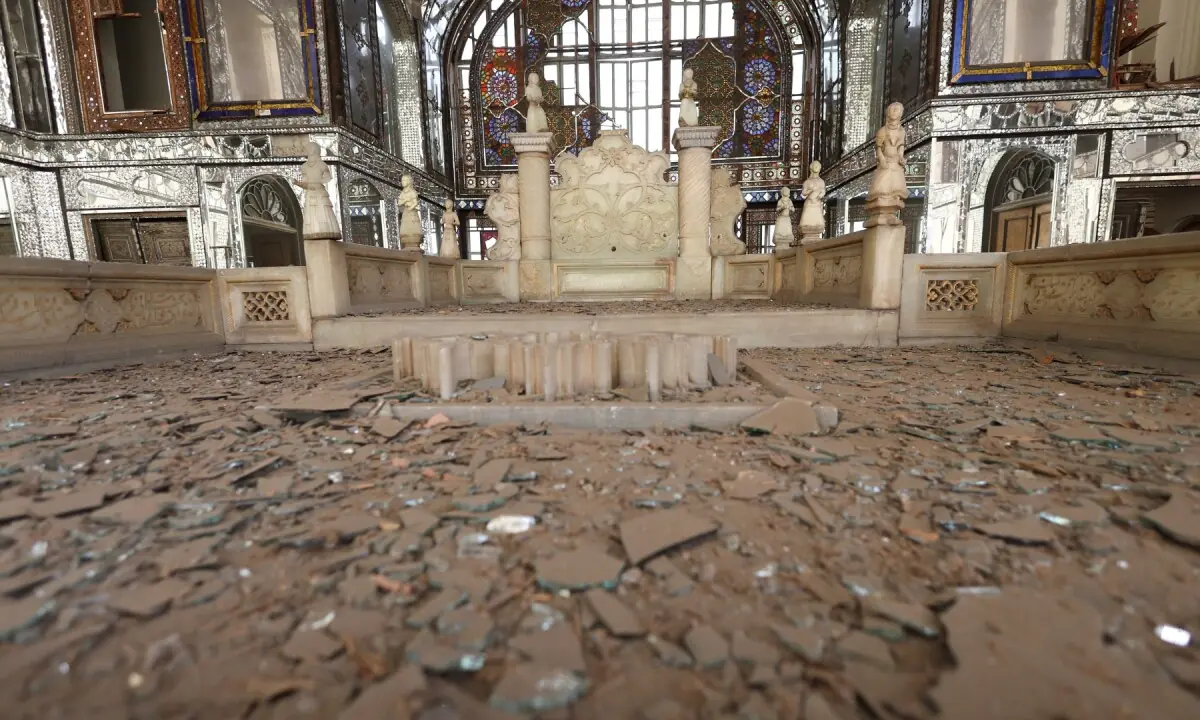
US-Israeli Airstrikes Destroy Iran's Cultural Heritage Amid Ongoing Conflict
Topic: politicsRegion: Middle EastUpdated: i12 outletsSources: 21⚠ Bias gap — sources divergeSpectrum: Mostly Center⏱ 4 min read📡 Wire pickup: 2
Story Summary
SITUATION
After the US and Israel launched airstrikes, the campaign has devastated Iran's historic monuments. The strikes have drawn widespread condemnation for targeting sites of cultural significance.
Coveragetap to expand ▾Spectrum: Mostly Center🌍Other: 7 · ME: 4 · Asia: 4 · US: 3 · Europe: 1
Political Spectrum
Position is inferred from coverage mix.
i12 outlets · Center
Left
Center
Right
Left: 4
Center: 13
Right: 2
Geography Coverage
Distribution of where coverage is coming from.
i12 unique outlets · Dominant: Global
KEY FACTS
- West Asia war LIVE: Conditions of Iran-U.S. MoU to be met before any further talks, Iran's top negotiator says
- MoU to be met before any further talks, Iran's top negotiator says West Asia war LIVE: Conditions of Iran-U.S.
- Iran’s chief negotiator Mohammad Bagher Ghalibaf on Tuesday (June 30, 2026) said that Iran was prioritising diplomacy with the United States, but remained ready for war.
- Current meetings held by Iran are aimed at fulfilling MoU commitments and we will not enter further negotiations until conditions of the MoU signed are met, Mr.
- Ghalibaf added, noting that Iran has sovereignty in the Strait of Hormuz along with Oman and it will never compromise on its rights there.
- 'Crazy' war violated int'l law, did not help Iranians, Council of Europe's Iran rapporteur says
- Netanyahu,” adding that it was ultimately the Iranian people who paid the price.
HISTORICAL CONTEXT
The ongoing military conflict between the United States and Israel against Iran, which escalated significantly in March 2026, serves as the immediate backdrop for the current situation.
This coordinated air campaign, initiated by the US and Israel, has involved extensive strikes targeting various military and strategic sites within Iran, including significant cultural monuments. These airstrikes are a direct response to Iran's military actions, which have been framed as retaliatory measures against the ongoing offensive.
Brief
The recent US-Israeli airstrikes have inflicted severe damage on Iran's cultural heritage sites, marking a significant escalation in the ongoing conflict. These strikes have targeted monuments that are not only symbols of national pride but also represent centuries of history, drawing condemnation from various quarters for their cultural implications.
The air campaign is seen as a continuation of military operations against Iran, which began earlier this year amid rising tensions in the region. Both the US and Israel have justified their actions as necessary measures in response to Iran's military activities, although critics argue that such strikes violate international norms regarding the protection of cultural heritage.
The destruction of these sites has raised alarms among historians and cultural advocates, who warn that this could lead to irreversible loss of heritage. As the conflict continues, the implications of these strikes extend beyond immediate military objectives, threatening to erase significant aspects of Iran's historical identity.
The situation remains fluid, with potential repercussions for diplomatic relations and cultural preservation efforts in the region.
Where sources differ
Bias gap1.10 / 2.0
Left- and right-leaning outlets are covering this story differently — in which facts to emphasize, which context to include, and how to frame causes and consequences.
Left-leaning (4)
ynetnews.com-0.80
Qatari citizen killed as Hormuz dispute freezes planned US-Iran talks - Ynetnews Qatari citizen killed as Hormuz dispute freezes planned US-Iran talks - Ynetnews Qatari citizen kil…
middle_east_eye-0.35
Iran says conditions for final agreement not yet met Iran says conditions for final agreement not yet met Iran says conditions for final agreement not yet met Iran has said negotia…
aljazeera_en-0.20
Trump: US envoys enroute to Doha for ‘perhaps important’ Iran meeting President Donald Trump said US negotiators are heading to Qatar for what he called a ‘perhaps important’ meeti…
npr_world-0.15
Trade tensions shake up Brazil's caipirinha spirit Trade tensions shake up Brazil's caipirinha spirit Trade tensions shake up Brazil's caipirinha spirit Trade tensions shake up Bra…
Center (13)
the_hindudawn_pakistanfortune_businesstheaustralian.com.austratnewsglobal.comcryptobriefing.comscrippsnews.comtimes_of_indiajapan_timesmsn.comms.nowapnews.comeuronews_world
Right-leaning (2)
jerusalem_post+0.75
'Crazy' war violated int'l law, did not help Iranians, Council of Europe's Iran rapporteur says 'Crazy' war violated int'l law, did not help Iranians, Council of Europe's Iran rapp…
washington_examiner+0.70
JD Vance is either dishonest or delusional in touting Iran deal JD Vance is either dishonest or delusional in touting Iran deal JD Vance is either dishonest or delusional in toutin…
Sources
19 of 19 linked articles
West Asia war LIVE: Iran prioritises diplomacy with U.S. but remains ready for war, chief negotiator says
thehindu.com0h agoCenter
↗
'Crazy' war violated int'l law, did not help Iranians, Council of Europe's Iran rapporteur says
jpost.com7h agoRight
↗
'Years to build, a moment to destroy': US-Israeli air campaign devastates some of Iran's most cherished monuments
dawn.com16h agoCenter
↗
Top climate tech exec: Europe is sweating through a heat crisis America solved decades ago
fortune.com17h agoLeft
↗
US, Tehran send teams to Doha as Iran oil exports rise
theaustralian.com.au19h agoLeft
↗
Trump Sends Envoys, But Iran Rejects Doha Meeting Claims
stratnewsglobal.com21h agoLeft
↗