
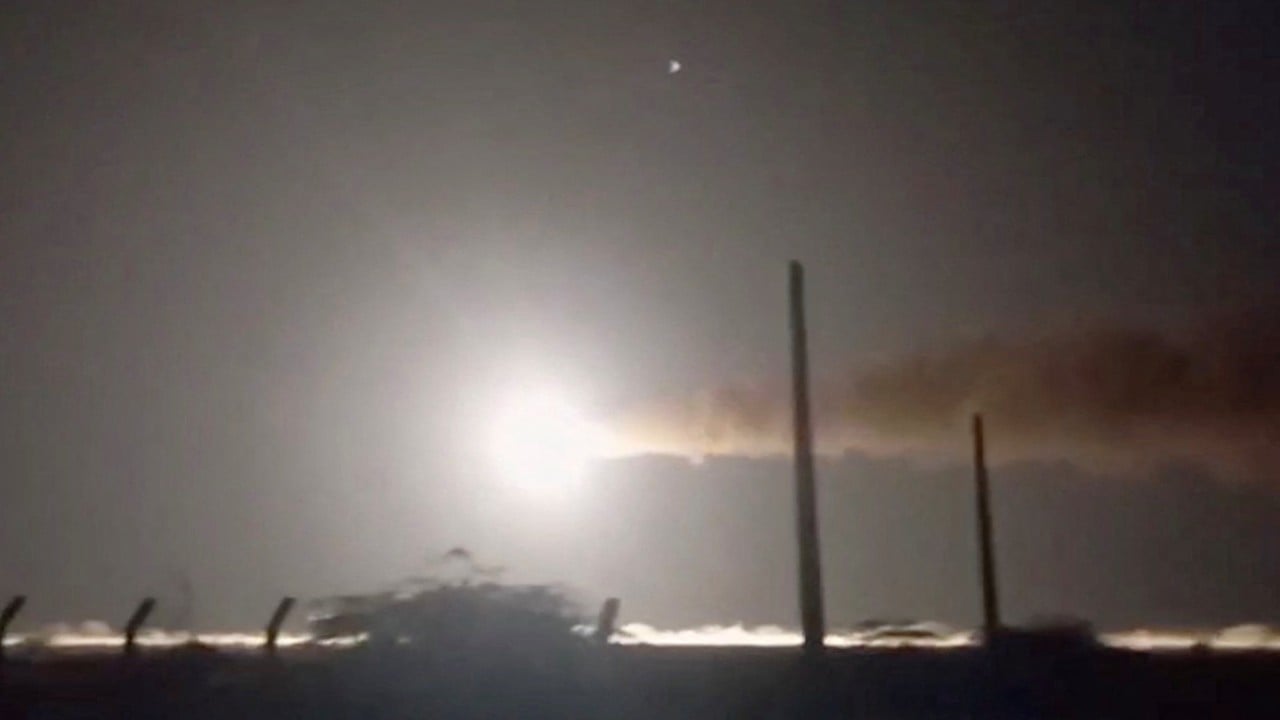
US Strikes Iran Amid Nuclear Program Tensions, Trump Rules Out Talks
Coveragetap to expand ▾Spectrum: Mostly Left🌍US: 2 · Europe: 1 · Asia: 1 · Other: 1
- The United States launched military strikes on Iran, intensifying the ongoing conflict over Iran's nuclear program (per news.google.com).
- President Donald Trump threatened further strikes against Iran and emphasized that it is too early for new direct negotiations (per news.google.com).
- Trump reported 'great progress' in the situation, although specifics of this progress were not detailed (per news.google.com).
- The strikes are part of a broader campaign involving the US and Israel against Iran, which began in early March 2026 (contextual knowledge).
- The US government has not provided detailed casualty figures from the recent strikes (per news.google.com).
- Iran's response to the strikes has not been detailed in the available source (per news.google.com).
- The strikes are linked to concerns over Iran's nuclear program, which has been a point of contention between Iran and Western governments (contextual knowledge).
The United States has conducted new military strikes on Iran, further escalating tensions surrounding Iran's nuclear program. This development comes amid ongoing hostilities that began with coordinated US and Israeli military actions against Iran in early March 2026.
President Donald Trump, addressing the situation, threatened additional strikes and stated that it is premature for new direct talks with Iran, despite claiming 'great progress' in the current circumstances. The specifics of the 'great progress' mentioned by Trump remain unclear, as no detailed explanation was provided.
The US government's decision to strike Iran is part of a broader strategy to address concerns over Iran's nuclear program, which have been a longstanding issue between Iran and Western governments. The recent military actions underscore the heightened state of conflict and the complexities involved in diplomatic negotiations.
While the US has not disclosed detailed casualty figures from the strikes, the impact on Iranian infrastructure and military capabilities is likely significant. The strikes are a continuation of the aggressive stance taken by the US and its allies, aiming to curb Iran's nuclear program and influence in the region.
Iran's response to the latest strikes has not been detailed in the available reports, leaving uncertainty about the immediate repercussions and potential retaliatory actions.
The situation remains tense, with both sides maintaining a posture of readiness for further escalation. many governments, particularly Western governments, continues to monitor the situation closely, as the potential for broader regional instability looms.
The US's firm stance against Iran's nuclear program reflects a commitment to preventing the development of nuclear weapons, a goal shared by its allies. As the conflict progresses, the focus remains on diplomatic efforts to de-escalate tensions while addressing the underlying issues related to Iran's nuclear activities.
The path forward will likely involve a combination of military pressure and diplomatic negotiations, with the aim of achieving a sustainable resolution.
- Iranian civilians and infrastructure bear the concrete costs of the US strikes, facing potential casualties and damage.
- The US military-industrial complex benefits from continued military actions, as defense contractors may see increased demand for weapons and services.
- Western governments, particularly the US and Israel, aim to prevent Iran from advancing its nuclear program, viewing it as a security threat.
- Whether President Donald Trump authorizes further military strikes on Iran in the coming weeks.
- Iran's potential retaliatory actions in response to the US strikes.
- Any new diplomatic initiatives or negotiations proposed by Western governments to address the nuclear program issue.
- The source emphasizes Trump's threat of further strikes and his statement on progress, without detailing Iran's perspective or response.
- The specifics of the 'great progress' reported by Trump remain unclear and are not detailed in the source.
- No source mentions the specific actions by Iran that may have triggered the US strikes, nor the broader geopolitical context of US-Iran relations.
- The source does not provide casualty figures or specific details on the impact of the strikes.
- The source does not clarify what specific actions by Iran led to the US decision to conduct new strikes.
- The source attributes the decision to strike to the US government, specifically President Trump, without detailing internal deliberations or allied input.