
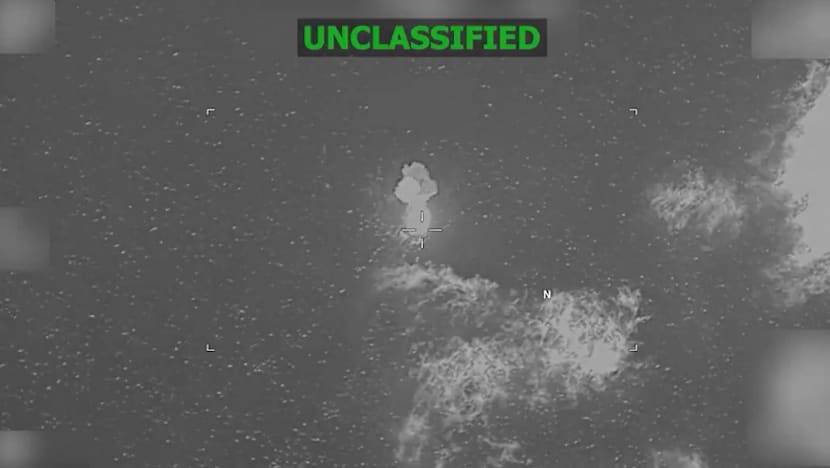
U.S. Military Strikes Alleged Drug Boats, Killing Three Amid Ongoing Probes
Topic: defense & securityRegion: asia pacificUpdated: i4 outletsSources: 13Spectrum: Mostly CenterFiltered: Europe (1/12)· Clear⏱ 4 min read⚠ 3d+ old
Casualties — Confirmed Figures
(The casualties are reported as part of a military operation targeting alleged drug traffickers.)U.S. military3 killed(U.S. military strike)
Story Summary
SITUATION
The U.S. military recently conducted a strike in the Eastern Pacific, resulting in the deaths of three individuals, an action that has drawn significant scrutiny.
Coveragetap to expand ▾Spectrum: Mostly Center🌍Asia: 5 · Other: 4 · US: 2 · Europe: 1
Political Spectrum
Position is inferred from coverage mix.
i4 outlets · Center
Left
Center
Right
Left: 1
Center: 10
Right: 1
Geography Coverage
Distribution of where coverage is coming from.
i4 unique outlets · Dominant: Asia
KEY FACTS
- The U.S. military struck a vessel in the Eastern Pacific, killing three people (per straitstimes.com).
- Rights groups have criticized the strikes, labeling them as 'extrajudicial killings' (per straitstimes.com).
- The U.S. military watchdog is currently probing these strikes on alleged drug boats (per news.google.com).
- The strikes are part of ongoing U.S. military operations in the region (per straitstimes.com).
HISTORICAL CONTEXT
The recent U.S. military strike on a vessel in the Eastern Pacific, resulting in two deaths and sparking significant human rights concerns, is a complex event that intersects with several historical threads involving U.S. military operations, drug trafficking, and maritime law. This incident, which has been labeled by rights groups as involving 'extrajudicial killings,' highlights ongoing debates about the legality and ethics of military actions in international waters, particularly in the context of anti-drug trafficking efforts. The immediate backdrop to this strike is the U.S. military's longstanding involvement in combating drug trafficking in the Pacific region. The Eastern Pacific is a critical corridor for drug smuggling operations, primarily involving narcotics such as cocaine, which are transported from South America to North America. The U.S. Southern Command has been actively engaged in operations to intercept these shipments, often in collaboration with regional partners. These operations are part of a broader strategy to disrupt the activities of transnational criminal organizations that are often linked to 'Designated Terrorist Organizations.'
Historically, the U.S. has justified its military presence and actions in the region under the framework of the War on Drugs, a policy initiative that gained momentum in the 1980s. This initiative was marked by increased military and law enforcement efforts to combat drug trafficking and production, primarily focusing on Latin America. The use of military force in these operations has been controversial, with critics arguing that it often leads to human rights violations and undermines the sovereignty of nations involved. The legal and ethical questions surrounding the U.S. military's actions in this context are deeply rooted in international law, particularly the United Nations Convention on the Law of the Sea (UNCLOS). This convention, established in 1982, provides a legal framework for maritime activities, including the rights and responsibilities of nations in international waters. While UNCLOS allows for the interdiction of vessels suspected of engaging in illegal activities such as drug trafficking, the use of lethal force remains a contentious issue, often requiring clear evidence and adherence to due process. The broader geopolitical landscape also plays a significant role in shaping these events. The Asia Pacific region, with its vast and often unregulated maritime spaces, presents unique challenges for law enforcement and military operations. The presence of non-state actors, including drug cartels and terrorist organizations, complicates the security dynamics, necessitating international cooperation and robust legal frameworks to address these threats effectively. In recent years, there has been a growing emphasis on enhancing maritime security through multilateral initiatives and partnerships. The Proliferation Security Initiative (PSI), launched in 2003, is one such effort aimed at stopping the trafficking of weapons of mass destruction and related materials. While not directly focused on drug trafficking, the PSI reflects a broader trend of using cooperative frameworks to address transnational threats. The incident in the Eastern Pacific also underscores the evolving nature of military operations in the region. Advances in technology, including the use of unmanned aerial vehicles (UAVs) and satellite surveillance, have expanded the capabilities of military forces to monitor and engage targets at sea. However, these technological advancements also raise new ethical and legal questions about accountability and the potential for collateral damage. As the U.S. military continues its efforts to combat drug trafficking in the Pacific, the international community will be closely watching the implications of this strike. The balance between effective law enforcement and respect for human rights remains a delicate one, requiring ongoing dialogue and cooperation among nations to ensure that military operations adhere to international norms and standards. In conclusion, the U.S. military strike on the Pacific vessel is a microcosm of larger issues at play in the region, involving the intersection of military strategy, international law, and human rights. As more details emerge, it will be crucial to assess the broader impact of such operations on regional stability and the rule of law.
Brief
The U.S. military recently conducted a strike in the Eastern Pacific, resulting in the deaths of three individuals, an action that has drawn significant scrutiny. Rights organizations have condemned the strike, labeling it an 'extrajudicial killing,' while U.S. officials maintain that the operation targeted 'narco-terrorists' involved in drug trafficking.
This incident is part of a broader pattern of military operations aimed at disrupting drug trafficking networks, which the U.S. government argues are linked to organized crime and violence. The military watchdog is currently investigating the circumstances surrounding these strikes, indicating that there may be further scrutiny of U.S. actions in the region.
As the situation develops, the implications of these military actions could affect U.S. relations with regional partners and raise questions about the legality and morality of such strikes.
The ongoing military operations are set against a backdrop of heightened tensions in the region, with various stakeholders closely monitoring the U.S. approach to combating drug trafficking and its associated violence.
Why it matters
- Three individuals were killed in the U.S. military strike, raising concerns about the legality of such actions (per straitstimes.com).
- Rights groups argue that these strikes constitute extrajudicial killings, which could undermine human rights standards in military operations (per straitstimes.com).
- The ongoing investigation by the military watchdog may lead to increased scrutiny of U.S. military operations and their compliance with international law (per news.google.com).
What to watch next
- Whether the U.S. military watchdog releases findings on the strikes by the end of the month.
- Any potential changes in U.S. military policy regarding strikes on alleged drug trafficking vessels.
- Further statements from rights organizations regarding the implications of these strikes.
Where sources differ
3 dimensionsFraming differences
?- MSN reports two deaths and one survivor, while straitstimes.com states three were killed without mentioning a survivor.
Omitted context
?- No source mentions the specific operational context or prior incidents that may have led to the strikes.
Notable claims
?- Washington describes the targets of these strikes as 'narco-terrorists' (per straitstimes.com).
Sources
1 of 12 linked articles · Filter: Europe