
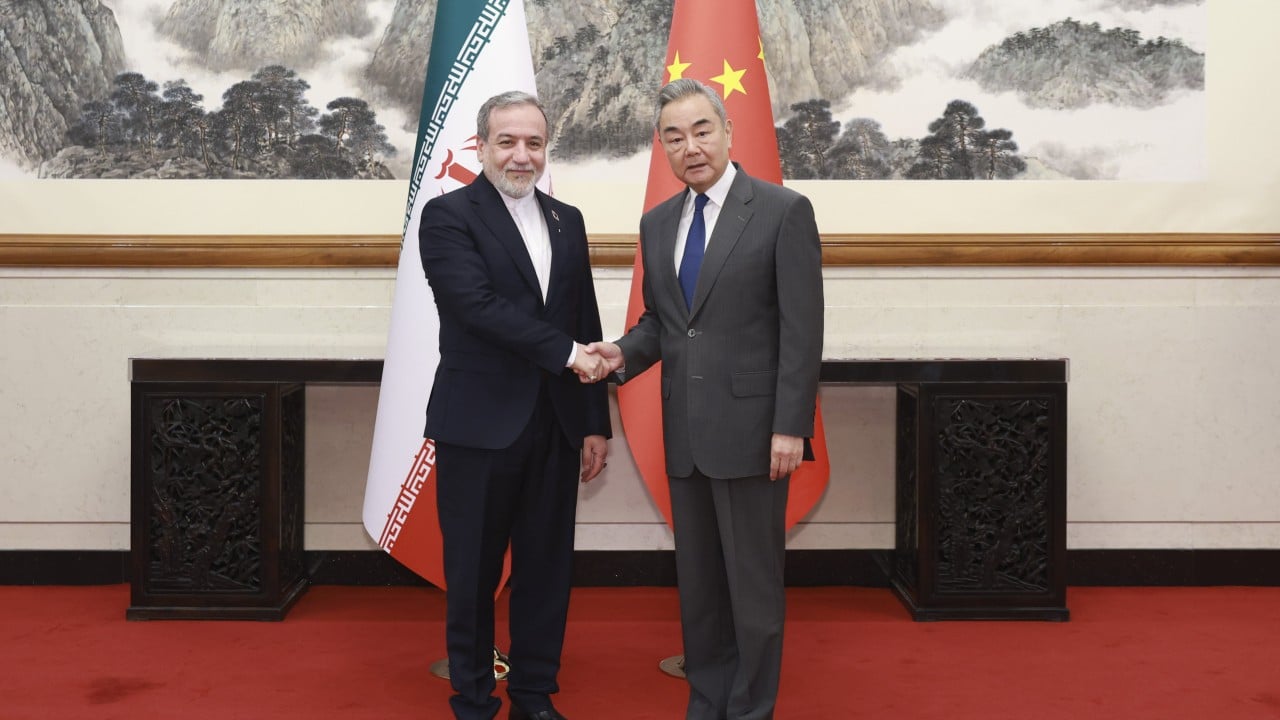
Wang Yi backs Tehran, warns against Yemen spillover and urges Hormuz reopening
Coveragetap to expand ▾Spectrum: Center Only🌍Asia: 2
- Wang Yi called for a political settlement to address regional tensions (per scmp.com)
- Wang Yi warned that regional tensions must not further spill over into Yemen (per scmp.com)
- Wang Yi urged the earliest possible reopening of the Strait of Hormuz (per scmp.com)
- Wang Yi’s remarks preceded an expected Xi Jinping meeting with President Donald Trump next week (per scmp.com)
China’s foreign minister Wang Yi used a public diplomatic intervention to reaffirm Beijing’s support for Tehran while pressing for a political settlement and warning against further spillover of regional tensions into Yemen.
Wang framed his remarks as part of a broader push to calm the Gulf: he urged the earliest possible reopening of the Strait of Hormuz and tied the talks to an expected meeting between Xi Jinping and President Donald Trump next week (per scmp.com).
Wang’s statement signals Beijing’s continued political backing for Iran even as it promotes negotiation over military escalation; the scmp.com account presents those two strands—support and mediation—side by side.
Beijing explicitly named Yemen as a risk of contagion from wider regional confrontations and sought to place the Strait of Hormuz—through which vital oil shipments transit—at the center of diplomatic urgency (per scmp.com).
The linkage of these remarks to an impending Xi–Trump meeting underscores why China chose to make the statement now: Beijing appears to want its positions on Iran, Yemen spillover, and Hormuz relief visible ahead of high-level U.S.-China talks (per scmp.com).
The coverage does not document any new Chinese operational steps—no sanctions, deployments, or concrete mediation mechanism—but frames the foreign minister’s declaration as both reassurance to Tehran and a call for broader political engagement to prevent escalation (per scmp.com).
Absent additional reporting, readers should treat Wang’s reaffirmation as a political signal tied to upcoming diplomacy rather than evidence of an immediate policy change on the ground (per scmp.com).
- Yemen’s civilian population bears concrete costs if conflict spreads there: Wang Yi warned the risk of further spillover into Yemen, implying escalation could worsen humanitarian harm already documented in the country (per scmp.com).
- Maritime commerce and crews using the Strait of Hormuz stand to lose freedom of passage and face economic disruption until the strait reopens; Wang called for its earliest reopening, tying Beijing’s concern to commercial lifelines (per scmp.com).
- Iran benefits politically from China’s public reaffirmation of support, which bolsters Tehran’s diplomatic position ahead of planned high-level talks between Xi Jinping and President Donald Trump (per scmp.com).
- China gains diplomatic leverage by positioning itself as both backer of Tehran and proponent of negotiated settlement, enhancing Beijing’s role in any mediated outcome discussed at the Xi–Trump meeting (per scmp.com).
- Whether Xi Jinping raises China’s positions on Iran, Yemen spillover, and reopening the Strait of Hormuz during his meeting with President Donald Trump next week (per scmp.com).
- Whether China follows Wang Yi’s statement with concrete mediation steps or proposals to resolve tensions involving Tehran and Yemen in the days after the Xi–Trump meeting (per scmp.com).
- Whether actions or statements from Tehran or Yemeni actors change after China’s reaffirmation of support and warning about spillover (per scmp.com).
- Only scmp.com is available in this pack; it frames Wang Yi’s remarks as both support for Tehran and a call for political settlement, and links them to an upcoming Xi–Trump meeting (per scmp.com).
- No source disputes Wang Yi’s claims; no alternative interpretations are present in the single source provided (per scmp.com).
- No source in this pack documents any prior triggering action that led Wang Yi to issue this reaffirmation or specific incidents in Yemen that prompted the explicit warning; readers lack that triggering sequence (per scmp.com).
- No source here provides data on civilian casualties or humanitarian metrics in Yemen tied to the warning, leaving the scale of the risk unspecified (per scmp.com).
- No source mentions specific economic figures for shipping or trade through the Strait of Hormuz to quantify the impact of its closure (per scmp.com).
- No source cites any third-party mediation proposals, UN/ICJ/ICC processes, or named governments besides China and the U.S. in relation to Wang’s statement (per scmp.com).
- The available source gives no differing numerical figures for casualties, trade volumes, or dates beyond the reference to an upcoming Xi–Trump meeting (per scmp.com).
- scmp.com presents Wang Yi’s remarks as a proactive diplomatic statement and does not attribute them to a specific prior action that triggered the intervention (per scmp.com).
- scmp.com attributes all quoted positions and calls—support for Tehran, warning on Yemen, urging Hormuz reopening—to Wang Yi (per scmp.com).