
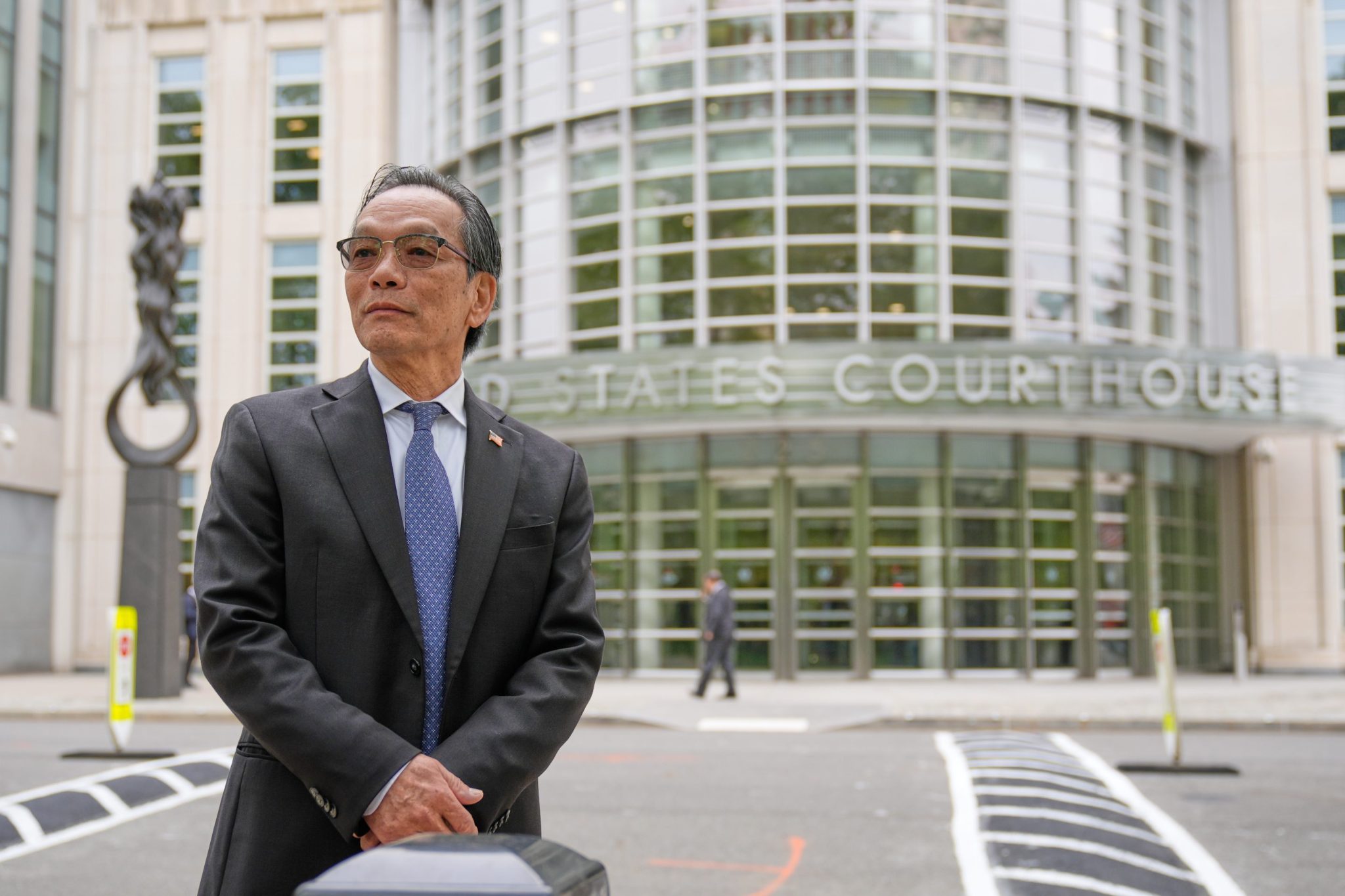
Trial Begins for Alleged Chinese Spy Hub in New York's Chinatown
Coveragetap to expand ▾Spectrum: Center Only🌍US: 2 · Other: 2 · Asia: 1
- Lu Jianwang is accused of running a secret Chinese spy headquarters in New York's Chinatown (per fortune.com).
- Lu's defense argues the site was a community center for renewing Chinese driver's licenses and social activities like ping-pong (per fortune.com).
- The trial is taking place in Brooklyn federal court (per fortune.com).
- The case has been ongoing for more than three years before reaching trial (per fortune.com).
The trial of Lu Jianwang, accused of operating a clandestine Chinese spy outpost in New York's Chinatown, has commenced in Brooklyn federal court. U.S. prosecutors allege that the location served as a hub for activities aimed at silencing and intimidating pro-democracy dissidents within the United States.
Central to the prosecution's case is a banner reportedly displayed inside the premises, which read: 'Fuzhou Police Overseas Service Station, New York USA.' This, they argue, indicates direct orders from Beijing to conduct espionage activities on American soil. Lu Jianwang, however, presents a starkly different narrative.
His defense team contends that the site was nothing more than a community center designed to assist members of the Chinese . They claim it provided practical services such as remote renewal of Chinese driver's licenses, especially crucial during the COVID-19 pandemic when travel was restricted.
Additionally, the center allegedly served as a social venue where individuals could engage in activities like ping-pong and mahjong. The trial, which has been in the making for over three years, highlights the broader tensions between the U.S. and China, particularly concerning allegations of espionage and interference in domestic affairs.
The outcome of this case could have significant implications for U.S.-China relations, especially in the context of ongoing geopolitical frictions. Both sides are expected to present evidence and testimonies that will either substantiate the claims of espionage or support the defense's portrayal of a benign community hub.
The court's decision will hinge on the ability of the prosecution to prove beyond reasonable doubt that the activities conducted at the site were indeed orchestrated by Chinese authorities for espionage purposes.
This trial not only puts Lu Jianwang's actions under scrutiny but also serves as a litmus test for how the U.S. judicial system handles cases involving alleged foreign interference. The proceedings are being closely watched by both national security experts and advocates for civil liberties, given the potential ramifications for Chinese communities in the U.S.
- Chinese .S. could face increased scrutiny and potential stigmatization if the site is confirmed as a spy hub.
- U.S.-China relations may further deteriorate if the trial substantiates claims of espionage, impacting diplomatic and economic interactions.
- Lu Jianwang's conviction could set a legal precedent for handling similar cases of alleged foreign interference in the U.S.
- The court's ruling on Lu Jianwang's case and its implications for U.S.-China relations.
- Potential appeals or further legal actions following the trial's conclusion.
- Reactions from Chinese communities in the U.S. and their impact on community relations.
- fortune.com emphasizes the prosecution's claim of espionage, while the defense's portrayal of a community center is also highlighted.
- The true nature of the activities conducted at the site remains contested between the prosecution and defense.
- No source mentions the broader geopolitical context of U.S.-China tensions that may influence perceptions of the trial.