
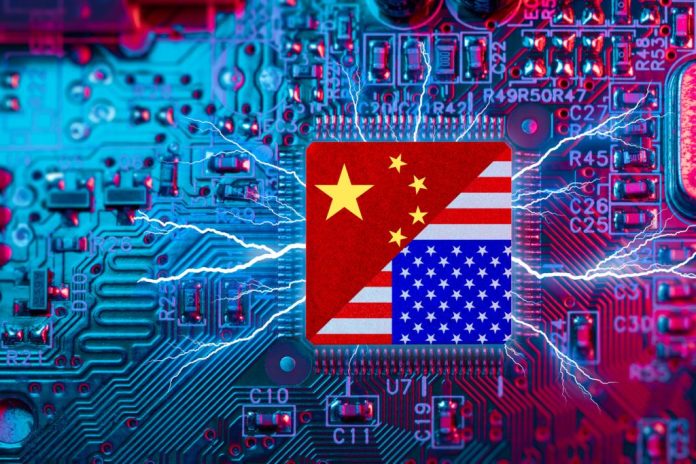
In 2018, those warnings resulted in restrictions on telecommunications companies such as Huawei.
Coveragetap to expand ▾Spectrum: Mixed🌍US: 1 · Other: 1
- In 2018, the United States imposed restrictions on Huawei, a major Chinese telecommunications company, citing national security concerns (per washingtonexaminer.com).
- Huawei has been at the center of U.S. concerns about the security of telecommunications infrastructure (per washingtonexaminer.com).
- The restrictions on Huawei are part of a broader U.S. strategy to counter perceived economic subversion by China (per washingtonexaminer.com).
In 2018, the United States took decisive action against Huawei, a leading Chinese telecommunications company, by imposing restrictions due to national security concerns. This move was part of a broader strategy to address the perceived threat of economic subversion by China within the U.S. supply chain.
The U.S. government has long been wary of the potential for Chinese-manufactured devices and software to be used for espionage, and Huawei has been a focal point of these concerns. The restrictions on Huawei reflect a deep-seated fear within the U.S. that Chinese telecommunications equipment could serve as a 'Trojan horse,' compromising the security of critical infrastructure.
While the focus has largely been on smartphones, cameras, and telecom equipment, a vast array of other connected devices has not received the same level of scrutiny, raising concerns about potential vulnerabilities. The U.S. government's actions against Huawei are emblematic of a larger geopolitical struggle with China over technological dominance.
The restrictions are seen as a necessary measure to protect national security, but they also highlight the complexities of global supply chains and the challenges of ensuring security in an interconnected world. Huawei, for its part, has consistently denied any wrongdoing and maintains that its products do not pose a security threat.
The company argues that the U.S. restrictions are politically motivated and part of a broader effort to stifle competition in the technology sector. The situation underscores the broader tensions between the U.S. and China, as both nations vie for influence and control over emerging technologies.
The outcome of this struggle will have significant implications for the global technology landscape and the future of international trade. As the U.S. continues to scrutinize Chinese technology companies, the focus on Huawei serves as a reminder of the ongoing challenges in balancing economic interests with national security concerns.
The debate over Huawei's role in the U.S. supply chain is likely to continue, as policymakers grapple with the complexities of a rapidly evolving technological landscape.
- U.S. consumers and businesses may face higher costs and limited access to advanced telecommunications technology due to restrictions on Huawei.
- Huawei's market position is threatened, potentially impacting its global operations and financial performance.
- The U.S. government's actions highlight the broader geopolitical struggle with China over technological dominance, affecting international trade relations.
- Other Chinese technology companies could face similar scrutiny, leading to further disruptions in global supply chains.
- Whether the U.S. government will impose additional restrictions on other Chinese technology companies.
- Huawei's response to the U.S. restrictions and its strategies to mitigate the impact on its business.
- Potential legal challenges by Huawei against the U.S. government over the imposed restrictions.
Left- and right-leaning outlets are covering this story differently — in which facts to emphasize, which context to include, and how to frame causes and consequences.
3 specific areas where coverage diverges — see below.
- The washingtonexaminer.com emphasizes the security threat posed by Huawei, framing it as a 'Trojan horse' in the U.S. supply chain.
- Huawei disputes the U.S. government's claims that its equipment poses a security threat.
- No source mentions the specific evidence or incidents that led to the U.S. government's decision to impose restrictions on Huawei.
- The broader economic impact of the restrictions on U.S. businesses and consumers is not detailed.