
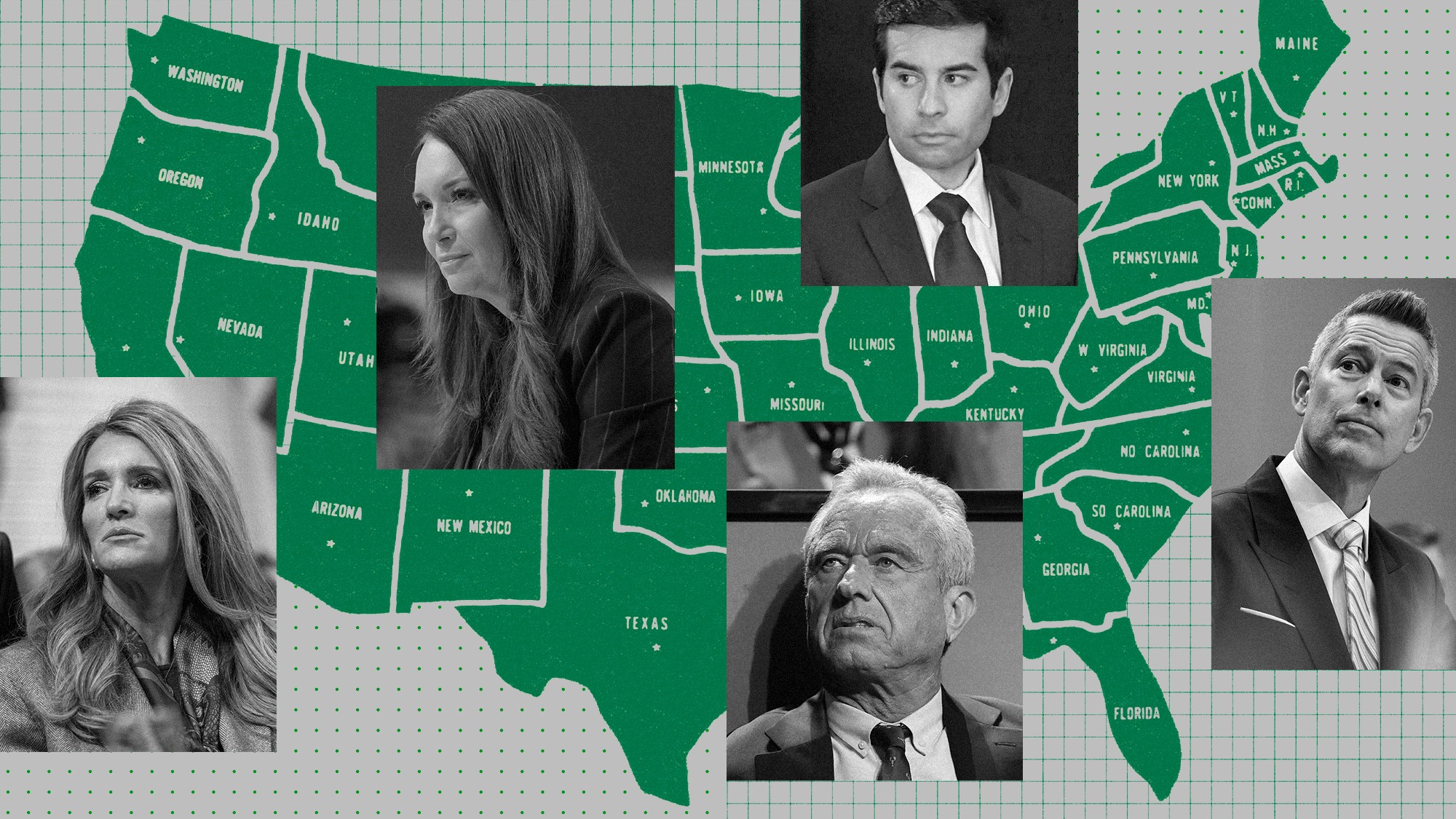
White House ran a Cabinet travel 'points' contest that steered secretaries to swing districts
Coveragetap to expand ▾Spectrum: Left Only🌍US: 1 · Other: 1
- White House Chief of Staff Susie Wiles meets nearly every day with Meghan Bauer to review Cabinet travel and who is in swing districts at that moment (per The Atlantic).
- The formal competition ran from Memorial Day to Labor Day, and officials said secretaries will likely be encouraged to continue through November (per The Atlantic).
- Several White House officials said no one ever loses points and trips to solidly blue areas could still count toward the contest (per The Atlantic).
- Raw Story reported the contest raised concerns under the Hatch Act and framed the program as pitting Cabinet members against one another for secret points (per news.google.com).
The White House ran an unofficial Cabinet Travel Competition that tracked which Cabinet secretaries visited politically competitive congressional districts and states and encouraged travel into those areas, according to reporting that names Susie Wiles and Meghan Bauer as coordinating the effort (per The Atlantic).
The Atlantic reports that Wiles meets nearly every day with Meghan Bauer to review who is traveling and which officials are in swing districts; the formal contest ran from Memorial Day to Labor Day and officials said secretaries may be encouraged to continue through November (per The Atlantic).
Several White House officials told The Atlantic the scoring never penalized anyone and that trips to reliably Democratic areas could still earn points; the reporting also says there were rumors of a prize such as a dinner with the president but that many officials described the contest as primarily for bragging rights (per The Atlantic).
Raw Story framed the program as a competition that pitted Cabinet members against one another and raised Hatch Act concerns, highlighting legal and ethical questions about politically targeted official travel (per news.google.com).
The two outlets thus converge on the existence and mechanics of a points system and daily coordination by Wiles and Bauer, but they diverge in emphasis: The Atlantic focuses on internal logistics and duration, while Raw Story emphasizes potential legal exposure under the Hatch Act (per The Atlantic, news.google.com).
Why now: the program reportedly ran over the summer—Memorial Day through Labor Day—with officials expecting continued travel toward November midterms, making the disclosure salient as the administration intensifies political outreach (per The Atlantic).
Confirmed details are the existence of the contest, the named coordinators, the stated seasonality, and internal descriptions of scoring; claims about prizes and the degree to which the contest drove travel are reported as rumors or official characterizations rather than independently verified outcomes (per The Atlantic).
The coverage leaves open whether the contest violated the Hatch Act; Raw Story highlights that concern while The Atlantic does not document legal findings, only internal practices and official comments (per news.google.com, The Atlantic).
- - Voters in targeted congressional districts bear concrete political influence: the White House coordinated which Cabinet secretaries appeared in competitive districts during the summer campaign season, potentially concentrating federal visibility and resources in those districts (per The Atlantic). - Cabinet secretaries and their staffs face legal and reputational risk because media flagged the program as raising Hatch Act concerns, exposing named officials to potential investigations or sanctions (per news.google.com). - The Trump White House, specifically Susie Wiles and Meghan Bauer, benefits from mobilized Cabinet travel that amplifies the administration's messaging in swing areas ahead of the November midterms (per The Atlantic).
Whether the Office of Special Counsel or another ethics body opens a Hatch Act inquiry into Cabinet travel patterns identified in the reporting by early October. 2) Whether White House Chief of Staff Susie Wiles or Meghan Bauer change coordination practices or publicly disclose internal scoring rules before the November midterms. 3) Whether Cabinet secretaries continue travel into targeted districts through November as officials told reporters they likely would (per The Atlantic).
- The Atlantic details internal coordination, names Susie Wiles and Meghan Bauer, and reports the contest's formal season (per The Atlantic); Raw Story frames the story around Hatch Act legal concerns and competition dynamics (per news.google.com).
- No source documents an official Hatch Act finding or enforcement action; Raw Story raises legal concerns but does not cite an enforcement action (per news.google.com).
- Prize details (a dinner with the president) are reported as rumors in The Atlantic and not confirmed (per The Atlantic).
- No source in this pack cites any Office of Special Counsel review, formal ethics opinion, or prior formal guidance on Cabinet travel that would determine whether these actions violated the Hatch Act.
- No source provides systematic data on which specific districts received visits or measurable campaign effects (vote swings, constituent outreach metrics).
- No source details how White House travel funding or federal resources were allocated to support these visits (e.g., which agencies paid for travel).
- Civilian-impact or constituent-services consequences of concentrating Cabinet visits were not addressed by either source.
- The Atlantic gives time bounds 'Memorial Day to Labor Day' and mentions 'seven or eight of them' on the road in targeted districts (per The Atlantic); Raw Story does not provide these temporal specifics in the excerpt (per news.google.com, The Atlantic).
- The Atlantic documents that near-daily meetings between Susie Wiles and Meghan Bauer reviewed who was in swing districts and that the contest shaped where officials were sent (per The Atlantic). Raw Story treats the program as raising legal concerns without detailing the internal coordination cadence (per news.google.com).
- The Atlantic attributes coordination and oversight of the contest to Meghan Bauer and daily review meetings to Susie Wiles and Bauer (per The Atlantic). Raw Story attributes the program's competitive aspect and legal concern framing to reporting by outlets like Raw Story itself (per news.google.com).