
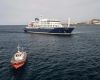
WHO Confirms Andes Virus on MV Hondius, Traces 23 Passengers
Coveragetap to expand ▾Spectrum: Center Only🌍Asia: 1 · LatAm: 1
- The World Health Organization confirmed the Andes virus as the cause of the outbreak on the MV Hondius (per en.mercopress.com).
- The Andes virus is the only hantavirus strain capable of human-to-human transmission (per en.mercopress.com).
- The WHO is tracing 23 passengers who left the ship at Saint Helena before the outbreak was identified (per en.mercopress.com).
- The Andes strain is predominant in the southern cone of South America and can cause a pulmonary syndrome with a fatality rate of up to 40% in its most aggressive variants (per en.mercopress.com).
The World Health Organization (WHO) has confirmed that the Andes virus is responsible for the recent outbreak aboard the MV Hondius, a polar cruise ship. This confirmation marks a significant epidemiological development, as the Andes virus is the only hantavirus strain known to transmit between humans.
The outbreak has resulted in eight confirmed cases, prompting an international effort to trace 23 passengers who disembarked at the island of Saint Helena before the outbreak was identified. Among the confirmed cases is a Swiss citizen who, along with his wife, left the ship at Saint Helena. He is currently receiving treatment in Zurich.
The WHO's tracing efforts aim to prevent further spread of the virus, which is known for its potential to cause severe pulmonary syndrome with a high fatality rate. The Andes strain is predominantly found in the southern cone of South America, where it poses a significant public health challenge due to its aggressive nature.
The WHO's confirmation of this strain on the MV Hondius has widened the scope of the health investigation, as authorities work to contain the outbreak and prevent further transmission. The tracing of passengers is critical, given the virus's capability for human-to-human transmission.
This effort underscores the importance of swift action in managing infectious disease outbreaks, particularly those involving highly transmissible pathogens. The situation aboard the MV Hondius highlights the challenges faced by global health authorities in monitoring and controlling the spread of infectious diseases in an increasingly interconnected world.
The WHO's response to this outbreak will be closely watched as it unfolds, with implications for future public health strategies. As the investigation continues, health officials are urging those who may have been exposed to the virus to seek medical attention and follow public health guidelines to mitigate the risk of further transmission.
The WHO's efforts to trace and monitor the affected passengers are ongoing, with the goal of preventing additional cases and safeguarding public health.
- The outbreak on the MV Hondius poses a direct health risk to the 23 passengers who disembarked at Saint Helena, as they may have been exposed to the Andes virus, which can cause severe illness with a high fatality rate.
- The Andes virus's capability for human-to-human transmission increases the potential for wider spread, posing a public health challenge that requires coordinated international response efforts.
- The WHO's tracing efforts are crucial in preventing further transmission of the virus, highlighting the importance of rapid response in managing infectious disease outbreaks.
- Whether the WHO successfully traces all 23 passengers who disembarked at Saint Helena.
- Any new cases of the Andes virus linked to the MV Hondius outbreak.
- Updates on the health status of the Swiss citizen receiving treatment in Zurich.
- No source mentions the specific measures being taken by the WHO to trace and monitor the passengers who disembarked at Saint Helena.
- There is no information on how the outbreak was initially detected aboard the MV Hondius.