
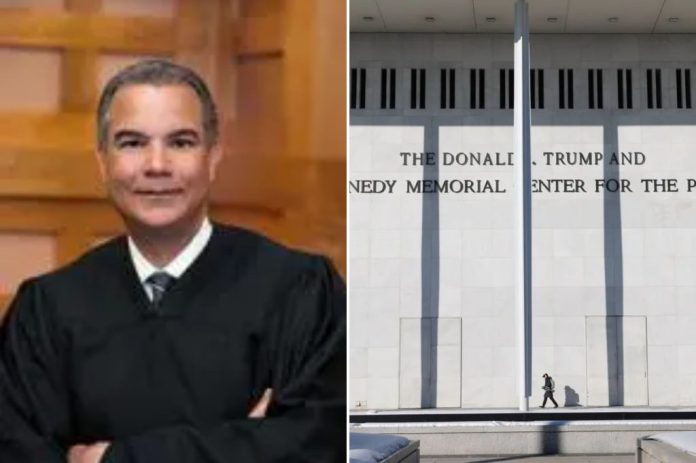
Who is Christopher Cooper, the judge who blocked Trump’s plans for the Kennedy Center?
Coveragetap to expand ▾Spectrum: Mostly Center🌍US: 3 · Europe: 1 · Other: 1
- Kennedy Center for the Performing Arts, previously set to commence on July 5, and ordered the president’s name to be removed from the arts center.
- Judge Cooper was nominated to the bench in 2014 by then-President Barack Obama and subsequently confirmed by the Senate in a unanimous vote.
District Judge Christopher Cooper of Washington, D.C., delivered a significant blow to President Donald Trump's administration by blocking the planned two-year renovation of the John F. Kennedy Center for the Performing Arts.
The renovation, which was set to begin on July 5, included the controversial decision to prominently feature Trump's name on the center, a move that Cooper has now ordered to be removed. This ruling reflects ongoing tensions between the judiciary and the Trump administration, particularly as Trump has publicly criticized judges who he perceives as politically motivated.
Cooper, nominated by former President Barack Obama and confirmed unanimously by the Senate, has found himself at the center of this political storm. In response to the ruling, Trump took to Truth Social, labeling Cooper as part of the 'Radical Left Democrats', highlighting the polarized political climate surrounding judicial decisions involving the former president.
The implications of this ruling extend beyond the Kennedy Center, as it underscores the judiciary's role in checking executive power, particularly in politically charged contexts.
As the renovation plans are halted, the future of the Kennedy Center's development remains uncertain, with potential ramifications for Trump's public image and legacy as he continues to navigate a contentious political landscape.
- Judge Christopher Cooper's ruling to block former President Trump's plans for the Kennedy Center has significant implications for the arts community and federal funding.
- By removing Trump's name from the center, the decision reinforces the principle of non-partisanship in cultural institutions, potentially influencing how future administrations approach naming rights and funding allocations for the arts.
- This ruling directly affects artists and organizations that rely on federal support, as it may alter the landscape of funding and recognition in the arts sector, ensuring that political affiliations do not overshadow artistic merit.
- Watch for the U.S. Supreme Court's decision on whether to hear appeals related to lower court rulings on Trump's actions, expected within the next month.
- Monitor the Kennedy Center's response to the ruling, which may include a public statement or legal action within the next 72 hours.
- Keep an eye on upcoming congressional hearings where lawmakers may question the implications of the ruling on federal funding for cultural institutions, scheduled for next week.
- Anticipate potential statements from Trump's legal team regarding their next steps, which could be released within the next few days.
- Follow developments in public opinion polls regarding Trump's support among voters, which may be updated in the next quarterly survey results.
Left- and right-leaning outlets are covering this story differently — in which facts to emphasize, which context to include, and how to frame causes and consequences.