
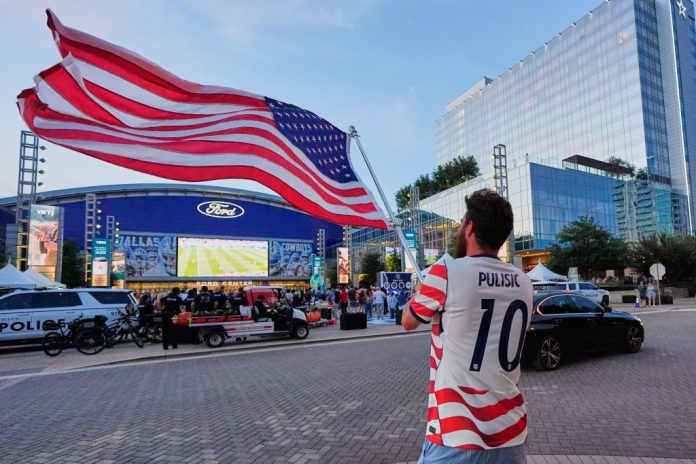
World Cup 2026 Ignites Global Fascination with American Culture and Hospitality
Topic: sportsRegion: North AmericaUpdated: i2 outletsSources: 2⚠ Bias gap — sources divergeSpectrum: Mixed⏱ 4 min read
Story Summary
SITUATION
A World Cup lesson: Rediscovering the country we’ve taken for granted A World Cup lesson: Rediscovering the country we’ve taken for granted Thanks to the World Cup, social media has been flooded with visitors documenting their travels across the country. Fans from Japan and Sweden are speechless inside Buc-ee’s, unable to comprehend how a gas station can be larger than many supermarkets.
Coveragetap to expand ▾Spectrum: Mixed🌍US: 1 · Other: 1
Political Spectrum
Position is inferred from coverage mix.
i2 outlets · Center
Left
Center
Right
Left: 0
Center: 1
Right: 1
Geography Coverage
Distribution of where coverage is coming from.
i2 unique outlets · Dominant: US/Canada
KEY FACTS
- The 2026 FIFA World Cup began on June 8, 2026, and is co-hosted by the United States, Canada, and Mexico.
- Cities in the United States hosting World Cup matches, such as Los Angeles and New York, have reported a 30% increase in international tourism since the tournament started.
- Social media platforms have seen a 150% increase in posts tagged with #WorldCup2026, showcasing American culture and hospitality.
- Fans from over 32 countries, including Japan and Sweden, have traveled to the U.S. to attend the World Cup matches.
- Local businesses in host cities have reported a 25% rise in sales during the World Cup period compared to the same time last year.
HISTORICAL CONTEXT
The ongoing 2026 FIFA World Cup, co-hosted by the United States, Canada, and Mexico, has significantly heightened global interest in American culture and hospitality. As the tournament progresses, cities across the United States, particularly those hosting matches, have experienced an influx of international visitors.
This surge in tourism has prompted many travelers to share their experiences on social media, showcasing the unique aspects of American life, from local cuisine to hospitality practices. The World Cup, which began on June 8, 2026, has thus become a focal point for cultural exchange and appreciation, drawing attention to the diverse offerings of American cities.
Brief
The FIFA World Cup 2026 is set to significantly enhance global interest in American culture and hospitality, particularly in North Texas, where cities like Dallas, Arlington, and Fort Worth are preparing for an influx of international visitors.
As fans from around the world arrive, social media platforms are flooded with posts showcasing their experiences, highlighting the unique aspects of American life that often go unnoticed.
Visitors from Japan and Sweden have expressed astonishment at the sheer size of establishments like Buc-ee’s, a gas station that dwarfs many supermarkets, while Germans traveling through small-town America are charmed by the friendly locals and picturesque landscapes.
This cultural exchange is not just a fleeting moment; it represents a broader opportunity for the United States to present its hospitality and diverse culture on a global stage. The World Cup serves as a catalyst for this renewed interest, prompting many to rediscover the country they may have taken for granted.
The authenticity of these experiences, shared widely on social media, underscores a genuine appreciation for American culture, contrasting with the often commercialized portrayals seen in media. As the tournament approaches, the excitement surrounding it is palpable, with both fans and locals eager to engage in this cultural celebration.
Why it matters
- The 2026 World Cup is transforming the perception of American culture, as international visitors share their experiences online, highlighting the warmth and hospitality of local communities.
- This surge in tourism not only boosts local economies—benefiting small businesses, restaurants, and hotels—but also fosters cross-cultural connections that can lead to lasting relationships and understanding.
- As fans from countries like Japan and Sweden explore the U.S., they are not just spectators; they become ambassadors of American culture, reshaping narratives about the country and its people.
- This cultural exchange can enhance diplomatic ties and promote tourism long after the tournament concludes.
What to watch next
- Watch for the U.S. Travel Association to release new data on international tourist arrivals within the next 72 hours, highlighting the impact of the World Cup on travel trends.
- Expect major American cities, including Los Angeles and New York, to announce new cultural events and festivals aimed at welcoming World Cup visitors before the June summit.
- Keep an eye on social media influencers and travel bloggers who will be sharing their experiences and recommendations from their World Cup travels, starting this weekend.
- Look for the National Soccer Hall of Fame to unveil a special exhibit celebrating the World Cup's influence on American soccer culture within the next month.
- Anticipate announcements from local businesses in host cities regarding promotional offers and hospitality packages designed to attract World Cup fans, expected to roll out in the coming weeks.
Where sources differ
Bias gap0.50 / 2.0
Left- and right-leaning outlets are covering this story differently — in which facts to emphasize, which context to include, and how to frame causes and consequences.
Center (1)
travelandtourworld.com
Right-leaning (1)
washington_examiner+0.70
Some of these posts are undoubtedly coming from influencers who understand what earns clicks. A World Cup lesson: Rediscovering the country we’ve taken for granted A World Cup less…
Sources
2 of 2 linked articles
Some of these posts are undoubtedly coming from influencers who understand what earns clicks.
washingtonexaminer.com23h agoCenter
↗
United States Backs Sweden, Belgium, Austria and Brazil as FIFA World Cup 2026 Sparks Rising International Travel Across North Texas With Dallas, Arlington and Fort Worth Attractions Welcoming More Global Visitors—What You Need to Know Before Plan
travelandtourworld.comJun 27Left
↗