
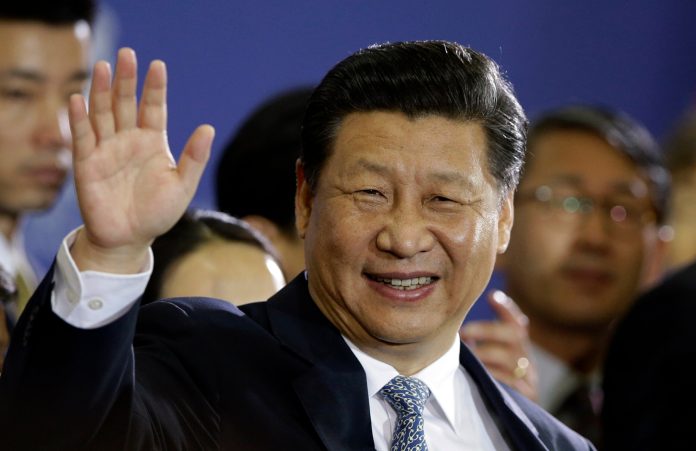
Xi urges BRICS to mediate Middle East as bloc calls for 'maximum restraint' after Iran-UAE strikes
Topic: geopoliticsRegion: Middle EastUpdated: i2 outletsSources: 5⚠ Bias gap — sources divergeSpectrum: Mostly Center⏱ 3 min read
Story Summary
SITUATION
Chinese President Xi Jinping urged BRICS countries to play a peacemaking role in the Middle East, casting China and the bloc as diplomatic counterweights to the United States and its allies (per WashingtonExaminer). BRICS members adopted the New Delhi Declaration calling for “maximum restraint” and expressed deep concern over continued escalation (per WashingtonExaminer).
Coveragetap to expand ▾Spectrum: Mostly Center🌍US: 1 · Other: 1
Political Spectrum
Position is inferred from coverage mix.
i2 outlets · Center
Left
Center
Right
Left: 0
Center: 1
Right: 1
Geography Coverage
Distribution of where coverage is coming from.
i2 unique outlets · Dominant: US/Canada
KEY FACTS
- Chinese President Xi Jinping called on BRICS countries to play a peacemaking role in the Middle East (per WashingtonExaminer).
- BRICS expressed deep concern over continued escalation in the Middle East (per WashingtonExaminer).
HISTORICAL CONTEXT
The immediate backdrop is the ongoing March 2026 United States–Israel military campaign against Iran, launched after a sustained period of cross-border and regional attacks; Iranian military operations in 2026 have been responses to that campaign.
In the year before those strikes, Israel and Iran moved from periodic proxy clashes to direct exchanges: throughout 2024 Israel carried out strikes on Iranian military positions and allied militias in Syria and Iraq, and Tehran responded with missile, drone, and proxy attacks that in turn shaped 2025 escalations and the coordinated US–Israel action in early March 2026.
Brief
Chinese President Xi Jinping used a BRICS summit platform to press the bloc to take a peacemaking role in the Middle East, framing BRICS as a diplomatic counterweight to the United States and its allies (per WashingtonExaminer).
The gathering produced the New Delhi Declaration, in which member states urged “maximum restraint” and voiced deep concern about continued escalation tied in the source to recent Iran-UAE strikes (per WashingtonExaminer).
Xi’s appeal places Beijing and BRICS at the center of diplomatic competition over influence in the region: the WashingtonExaminer emphasizes that China is positioning the bloc as an alternative to U.S.-led efforts (per WashingtonExaminer).
BRICS’ language in New Delhi stops short of assigning direct blame but signals an interest in opening channels for negotiation and de‑escalation; the declaration’s call for restraint frames the bloc as a potential mediator rather than a partisan backer (per WashingtonExaminer).
The source links the timing of the statement to strikes between Iran and the United Arab Emirates, suggesting the bloc seeks to insert itself into a crisis that Washington and its partners have been managing diplomatically and militarily (per WashingtonExaminer).
The article reports these moves without presenting casualty totals or operational details of the strikes, focusing instead on diplomatic positioning and language adopted by BRICS (per WashingtonExaminer).
How BRICS would operationalize mediation—who would lead negotiations, what leverage members would apply, and whether parties to the strikes would accept BRICS facilitation—remains unspecified in the source and will determine whether the declaration produces a tangible diplomatic channel or stays declaratory (per WashingtonExaminer).
Why it matters
- UAE civilians and infrastructure bear concrete costs from the Iran-UAE strikes through physical damage and disrupted commerce in the Emirates; the WashingtonExaminer links BRICS’ call to those strikes (per WashingtonExaminer).
- China and BRICS stand to gain diplomatic influence in Middle East crisis management by positioning themselves as alternative mediators to the United States and its allies (per WashingtonExaminer).
- If BRICS persuades parties to accept mediation, UAE and Iranian decision-makers would face new external pressure points and possible negotiation pathways anchored outside Western-led forums (per WashingtonExaminer).
What to watch next
- Whether BRICS members publish an operational mediation plan or follow-up mechanism at a specified next meeting of BRICS leaders (per WashingtonExaminer).
- Whether China and other BRICS governments propose a named envoy or mediation team to the governments of Iran and the United Arab Emirates (per WashingtonExaminer).
- Whether the New Delhi Declaration’s call for “maximum restraint” is taken up in bilateral talks between UAE and Iran or in multilateral sessions that include the United States (per WashingtonExaminer).
Where sources differ
7 dimensionsBias gap0.50 / 2.0
Left- and right-leaning outlets are covering this story differently — in which facts to emphasize, which context to include, and how to frame causes and consequences.
Center (4)
thehindubusinessline.comtheindianeye.comnbcnews.comtribuneindia.com
Right-leaning (1)
washington_examiner+0.70
Chinese President Xi Jinping called on BRICS countries to play a peacemaking role in the Middle East, casting China and the bloc as diplomatic counterweights to the United States a…
7 specific areas where coverage diverges — see below.
Framing differences
?- Only the WashingtonExaminer is in this pack; it frames Xi and BRICS as a diplomatic counterweight to the United States and allies and links the declaration to Iran-UAE strikes (per WashingtonExaminer).
Disputed or unclear
?- No other outlets in this pack dispute or corroborate the linkage between BRICS’ statement and the Iran-UAE strikes; the causal connection is asserted but not independently verified by additional sources (per WashingtonExaminer).
Omitted context
?- No source in this pack provides casualty figures, operational details of the Iran-UAE strikes, or which specific BRICS members would lead mediation efforts; these omissions limit assessment of BRICS’ practical leverage (per WashingtonExaminer).
- No source in this pack mentions prior diplomatic contacts between BRICS members and Iran or the UAE that would affect willingness to accept mediation (per WashingtonExaminer).
- No source in this pack cites any international legal or accountability processes (ICC/ICJ/UN) related to the strikes (per WashingtonExaminer).
Conflicting figures
?- Only qualitative language appears in the source; no differing numeric figures are provided in this pack (per WashingtonExaminer).
Disputed causality
?- The WashingtonExaminer links BRICS’ call for mediation to recent Iran-UAE strikes, but with no detailed sequence or evidence from other outlets in this pack to confirm that the strikes directly triggered the New Delhi Declaration (per WashingtonExaminer).
Attribution disputes
?- The source attributes the call for mediation and the language ‘maximum restraint’ to BRICS collectively and to Chinese President Xi Jinping specifically (per WashingtonExaminer).
Related Developments1 story
Sources
5 of 5 linked articles
Xi Jinping casts China as a peacemaker at BRICS summit including Iran and UAE
washingtonexaminer.comSep 12Center
↗
Xi Jinping urges BRICS countries to play a peacemaker role in the Middle East conflict
thehindubusinessline.comSep 12Left
↗
PM Modi welcomes Chinese President Xi Jinping at BRICS Summit 2026
theindianeye.comSep 12Left
↗
At BRICS summit, China, Russia and India urge ‘maximum restraint’ in Middle East - nbcnews.com
nbcnews.comSep 12Left
↗
PM Modi holds bilateral meet with Chinese President Xi Jinping on sidelines of BRICS summit
tribuneindia.comSep 12Left
↗