
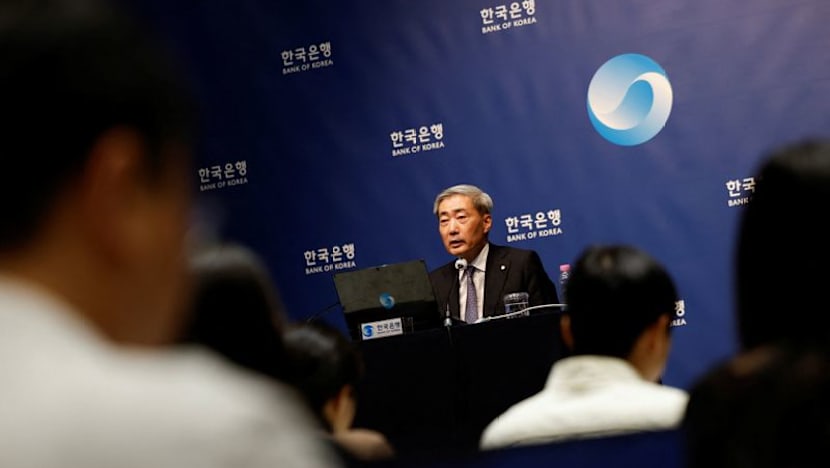
Bank of Korea minutes reveal split vote, signaling debate over consecutive rate hikes
Coveragetap to expand ▾Spectrum: Center Only🌍Europe: 1
- The split reflects disagreement between officials urging caution about further tightening and those worried that pausing could let inflation persist (per news.google.com).
- The document signals that the Bank of Korea is weighing the trade-off between immediate monetary tightening and guarding against economic downside from rapid hikes (per news.google.com).
Bank of Korea meeting minutes published this week revealed a clear split among policymakers over whether to press ahead with consecutive interest-rate increases.
The record documents dissenting views: some policymakers counseled caution, warning that further tightening could harm growth, while others pushed that pausing too soon risked letting inflation become entrenched (per news.google.com).
That divergence, captured verbatim in the minutes, is the most concrete sign to date that the central bank faces an internal trade-off between containing inflation and avoiding a policy-induced slowdown (per news.google.com).
Markets reacted to the disclosure by treating the bank's near-term path as uncertain, trimming the odds of an immediate follow-up hike while keeping longer-term rate expectations elevated (per news.google.com).
Bank officials framed the debate in technocratic terms—balancing headline inflation risks against domestic growth indicators—but the split opens space for political and market scrutiny of the bank's sequencing of moves (per news.google.com).
How the Bank of Korea resolves the disagreement will determine whether policy shifts toward a pause to shield growth or toward another increase to anchor inflation expectations; the minutes suggest no consensus yet (per news.google.com).
For now, investors and policymakers will watch incoming inflation and growth data for the next firm signal of which faction prevails in the bank's deliberations (per news.google.com).
- South Korean households face concrete costs if policymakers choose back-to-back hikes: higher mortgage and borrowing payments for homeowners and borrowers in South Korea, tightening household cash flow (per news.google.com).
- South Korean exporters and firms could bear immediate growth pain if the bank tightens further, increasing borrowing costs for companies reliant on short-term credit (per news.google.com).
- Financial-market participants benefit from clarity; bond investors and money-market traders gain from a definitive policy path while they currently face volatility due to the minutes' revealed split (per news.google.com).
- Whether the Bank of Korea's next policy decision includes a consecutive rate increase or a pause at its upcoming meeting (per news.google.com).
- Whether incoming South Korean inflation and growth reports shift the internal majority toward raising rates or pausing (per news.google.com).
- Whether market-implied odds for another Bank of Korea hike move materially after the next set of economic data (per news.google.com).
- Only one outlet is available in this pack (news.google.com), so no cross-outlet framing differences can be listed.
- No source disputes the existence of the split vote; the depth of dissent and which officials favored each option remain unclear in the available text (per news.google.com).
- No source in this pack names which specific Bank of Korea policymakers dissented or their institutional roles.
- No source provides quantified near-term economic thresholds (e.g., inflation rate or growth trigger points) that would determine the bank's pivot.
- No source discusses potential fiscal-policy or government discussions that might interact with the central bank's decision.
- No source mentions household mortgage exposure or specific corporate debt figures in South Korea that would clarify the scale of harm.
- The available source does not provide differing numerical figures for votes, inflation, or rates; no alternative figures are present (per news.google.com).
- The single source attributes the split to differing views on inflation risks versus growth risks but does not identify a prior triggering event beyond recent economic data generally influencing debate (per news.google.com).
- The minutes themselves are the attributed source for the split vote; the outlet reports the minutes showed dissent without attributing policy positions to named individuals (per news.google.com).