
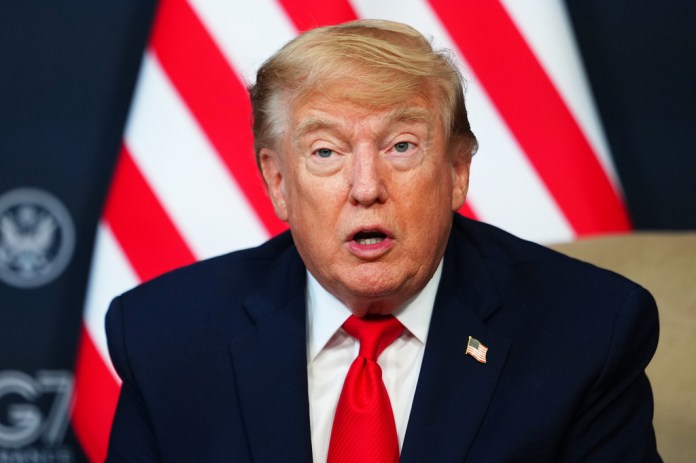
Trump and Netanyahu Clash Over Iran Conflict Strategy at G7 Summit
Topic: geopoliticsRegion: North AmericaUpdated: i2 outletsSources: 5⚠ Bias gap — sources divergeSpectrum: Mostly Center⏱ 4 min read📡 Wire pickup
Story Summary
SITUATION
After President Donald Trump criticized Israel's military strategy against Hezbollah, tensions with Israeli Prime Minister Benjamin Netanyahu escalated during the G7 summit. The two leaders, who jointly initiated the February 28 strikes on Tehran, now disagree on how to conclude the ongoing war in Iran (per Washington Examiner).
Coveragetap to expand ▾Spectrum: Mostly Center🌍Other: 3 · US: 2
Political Spectrum
Position is inferred from coverage mix.
i2 outlets · Center
Left
Center
Right
Left: 0
Center: 4
Right: 1
Geography Coverage
Distribution of where coverage is coming from.
i2 unique outlets · Dominant: Global
KEY FACTS
- Trump and Netanyahu jointly launched the Feb.
- 28 strikes on Tehran that began the war but are now on different tracks over how the conflict should end.
- “Without us, without the United States, there would be no Israel,” Trump said Tuesday during a bilateral meeting with Emir Sheikh Tamim Bin Hamad Al Thani of Qatar.
- US, Iran inch closer to deal, Trump says Sunday but timing remains unclear - Reuters
HISTORICAL CONTEXT
The ongoing military conflict between the United States and Israel against Iran, which began with coordinated strikes on February 28, 2026, marks a significant escalation in hostilities.
This military campaign has seen the U.S. and Israel targeting key Iranian military infrastructure, including power plants and air defenses, in response to Iran's military actions, which are characterized as retaliatory.
Brief
At the G7 summit in Evian, France, President Donald Trump and Israeli Prime Minister Benjamin Netanyahu showcased their growing rift over strategies to resolve the ongoing conflict in Iran. Trump criticized Israel's military actions against Hezbollah, an Iranian-backed group, suggesting that Syria should take responsibility for dealing with Hezbollah instead.
This criticism marks a significant departure from the previously unified front the two leaders presented when they jointly launched military strikes on Tehran on February 28, which initiated the current war. While Trump emphasizes a rapid end to the conflict, Netanyahu appears to maintain a more cautious approach, particularly regarding military engagements in Lebanon.
The Israeli military has stated that its recent strikes were retaliatory, aimed at preventing further attacks on northern Israel. Trump's assertion that without the United States, there would be no Israel underscores the U.S.'s pivotal role in Israeli security, yet it also reflects a growing frustration with Israel's military strategy.
The preliminary ceasefire agreement, which includes a proposed withdrawal of Israeli forces from Lebanon, has met with resistance from Netanyahu, indicating a potential stalemate in negotiations. As the U.S. pushes for a resolution, the differing perspectives of Trump and Netanyahu could complicate efforts to stabilize the region.
Where sources differ
Bias gap0.50 / 2.0
Left- and right-leaning outlets are covering this story differently — in which facts to emphasize, which context to include, and how to frame causes and consequences.
Center (4)
fox11online.comynetnews.comallisraelnews.comreuters.com
Right-leaning (1)
washington_examiner+0.70
Trump and Netanyahu jointly launched the Feb. Iran MOU highlights Trump’s divisions with Benjamin Netanyahu The G7 summit in Evian, France, put flaring tensions between President D…
Sources
5 of 5 linked articles
Trump suggests Syria take care of Hezbollah, criticizes Israeli military action in Lebanon
fox11online.com23h agoLeft
↗
Trump and Netanyahu jointly launched the Feb.
washingtonexaminer.com23h agoCenter
↗
Trump warns Iran ‘all hell will rain down’ if it gets nukes, tells Israel Syria can 'take care' of Hezbollah
ynetnews.comJun 16Left
↗
Israeli reactions to the Iran deal - Coalition and opposition members criticize failure to protect Israel’s security needs
allisraelnews.comJun 15Left
↗
US, Iran inch closer to deal, Trump says Sunday but timing remains unclear
reuters.comJun 14Left
↗